Room-by-Room Decorative Pillow Guide: How to Style Every Space Like an Architect
Room-by-Room Decorative Pillow Guide
The impact of decorative pillows depends not only on how you choose them, but also on where and how you use them. Since each space has different needs and usage patterns, the role of decorative pillows changes accordingly.
As an architect, one of the things I recommend most often is this: Don’t think of decorative pillows individually—think of them within the usage scenario of the space.
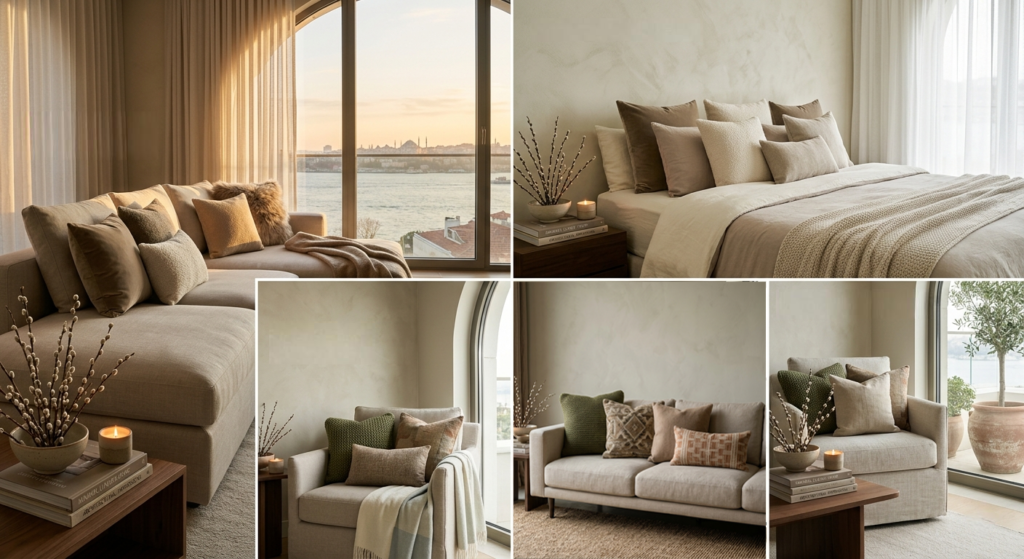
The living room is where decorative pillows are most visible. For this reason, the choices you make here directly define the character of the space.
Typically, 3 to 5 decorative pillows are ideal for a sofa. If you have a larger sofa, this number can be increased—but overdoing it can make the space feel cluttered.
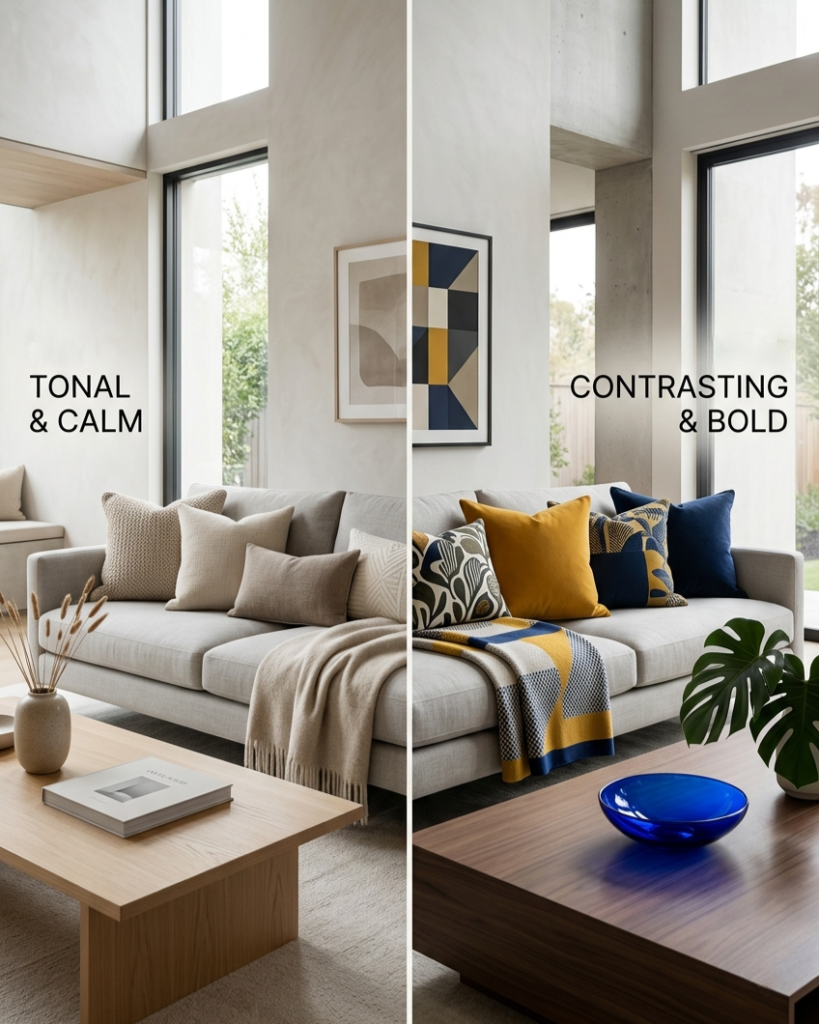
When it comes to color, you can follow two approaches: Either stay loyal to your existing color palette and work with tonal transitions, or create a focal point using contrasting colors.
What matters here is balance. Decorative pillows should stand out—but not overpower the space.
Armchairs & Accent Chairs: Small but Effective Touches
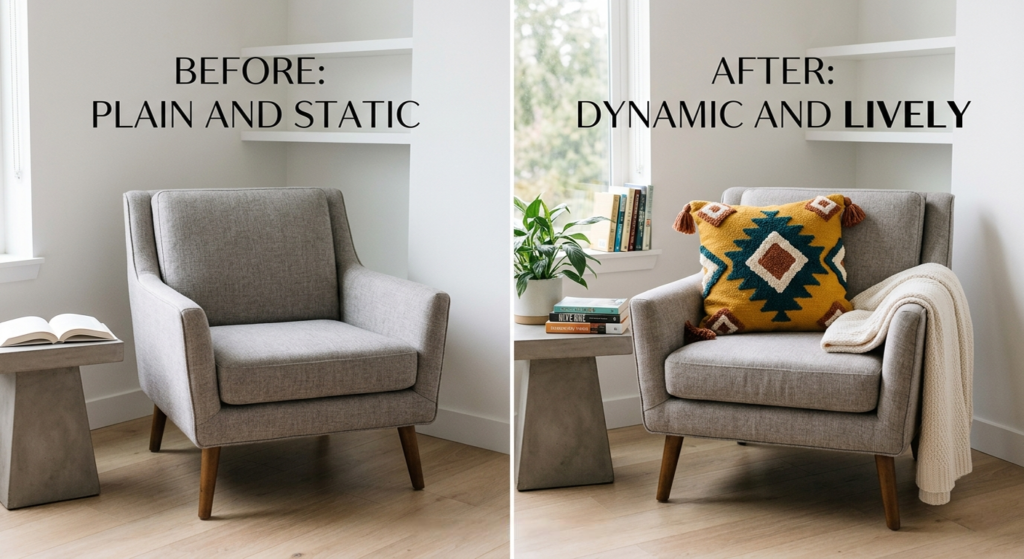
For single chairs, usually one decorative pillow is enough. The goal here is not to create a large composition, but to add a subtle accent. For this reason, bolder colors or different textures can be preferred.
Especially on a neutral armchair, adding a contrasting decorative pillow instantly brings movement into the space.
Reading Nooks & Relaxation Areas: Comfort First
In here, ergonomics is just as important as aesthetics.
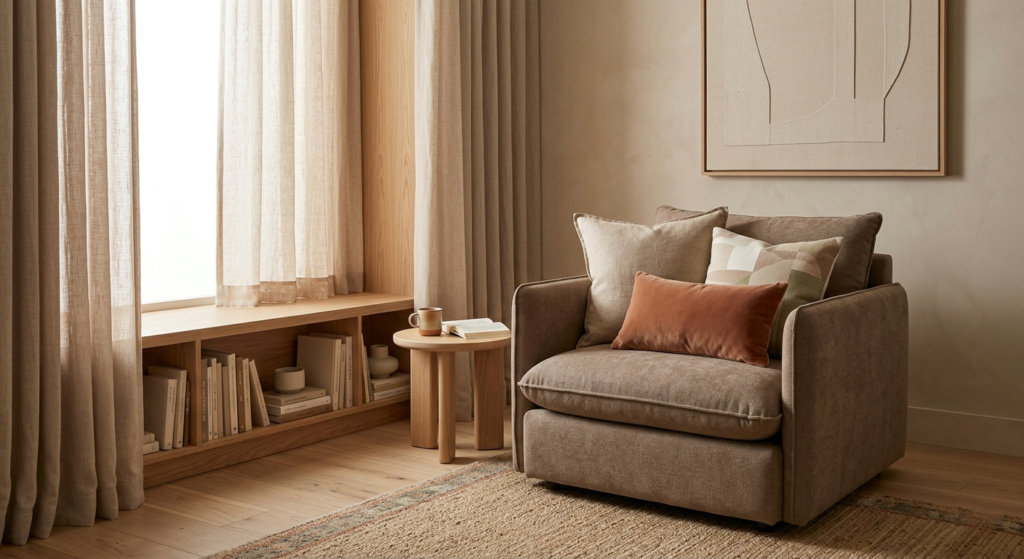
Softer or medium-firm, supportive decorative pillows can be preferred. Lumbar pillows are especially functional as they provide back support.
In terms of color and style, choosing warmer and more inviting tones (earth tones, cream, light brown) makes the space feel more livable.
If the fabric of the decorative pillow carries one of the colors already present in the room, it helps unify the space.
Bedroom: Layered and Inviting
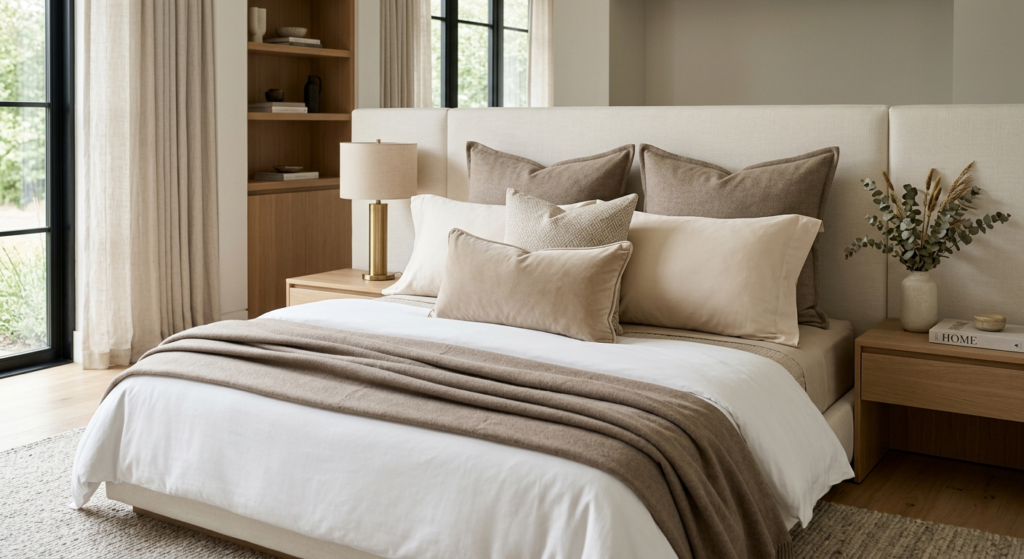
In the bedroom, decorative pillows create a sense of “hotel comfort.”
Typically, large pillows are placed at the back, medium-sized ones in front, and a lumbar pillow at the very front. This layered arrangement makes the bed look fuller and more inviting.
However, a practical note: Too many decorative pillows on a bed used daily can make it less functional. It’s important to balance aesthetics with practicality.
Kids’ & Teens’ Rooms: Playful and Dynamic
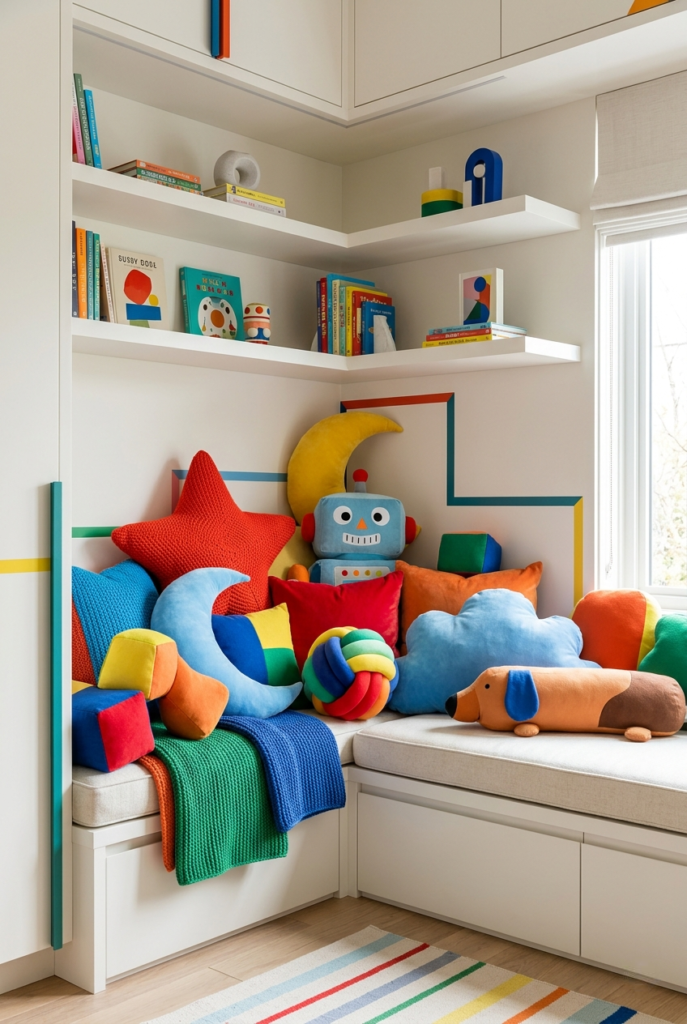
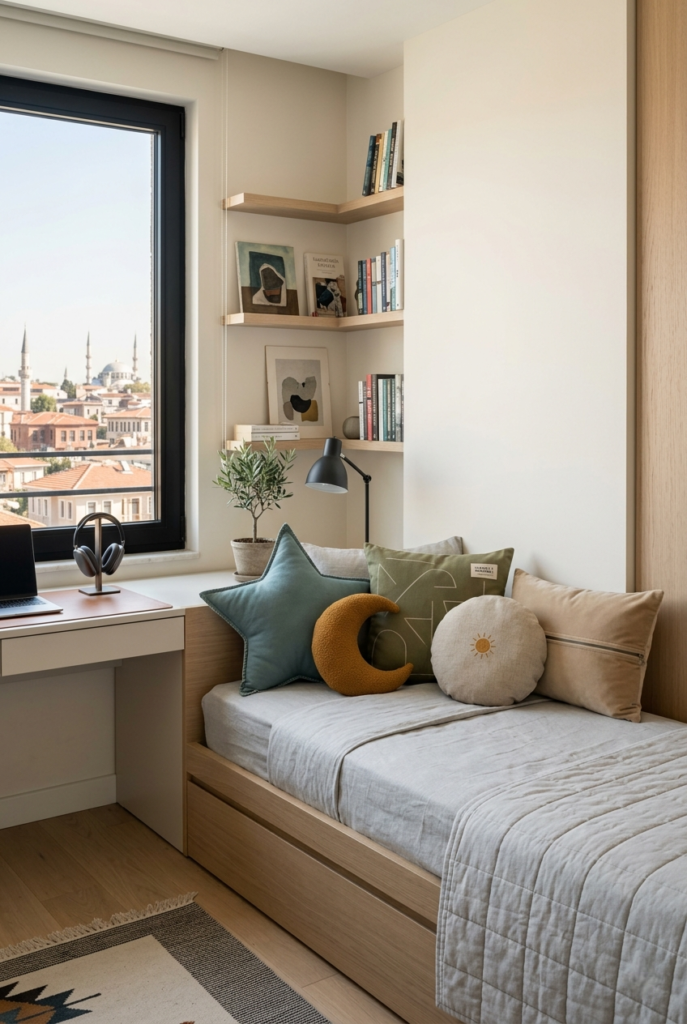
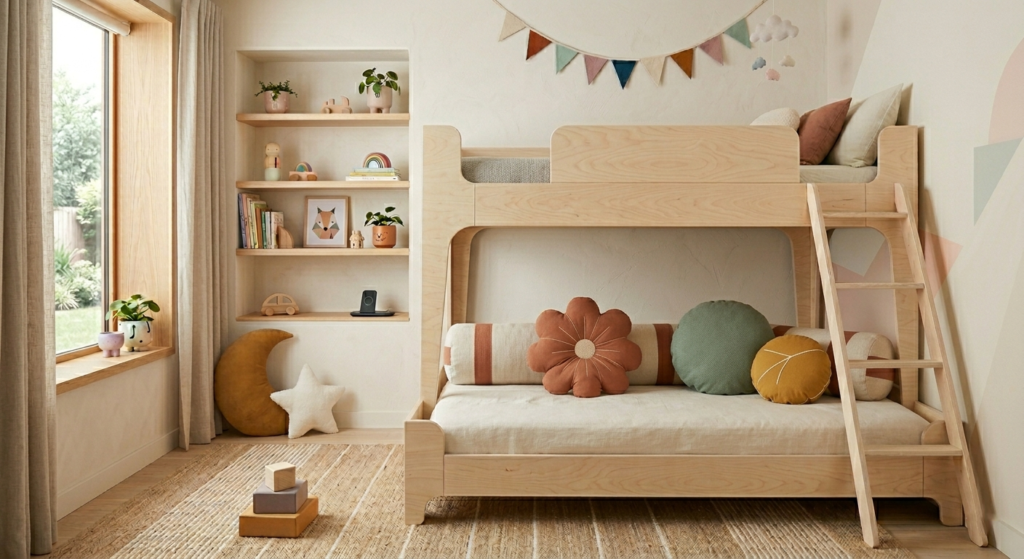
Here, you can break the rules a little. Move beyond standard square forms. Use star, moon, animal-shaped, or geometric (round, cylindrical) decorative pillows to add a sense of fun.
Choosing stain-resistant and washable fabrics can be a life-saving decision.
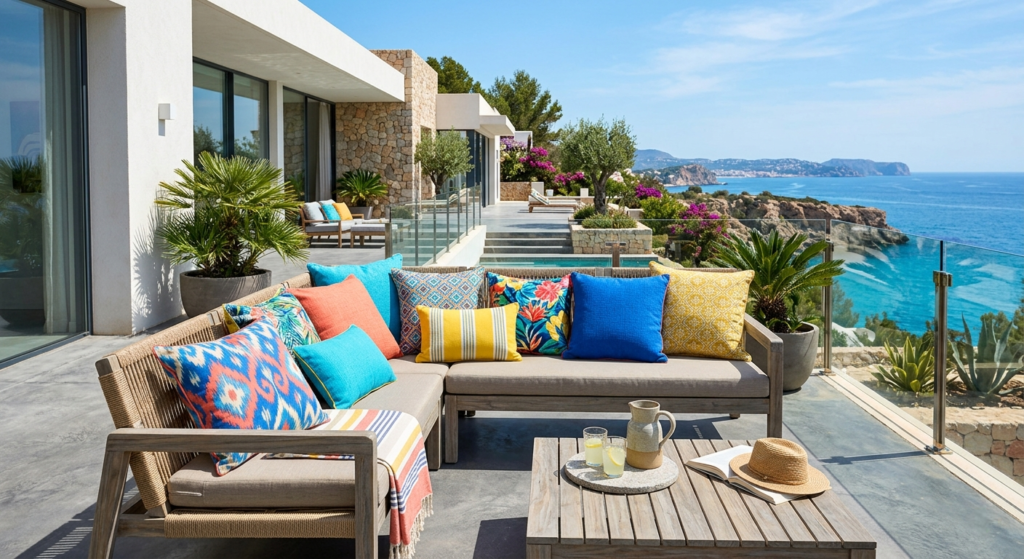
If you have a balcony or terrace, decorative pillows can make a big difference there as well.
However, the most important thing to consider here is fabric choice. Materials suitable for outdoor use—resistant to sunlight and moisture—should be preferred.
When it comes to color, you can be more flexible. Outdoor spaces can handle more vibrant and energetic combinations.
Thinking about each room individually is important—but ensuring the entire home feels cohesive is even more important.
You can use different decorative pillows in different rooms, but having them all draw from the same color palette or design language creates a professional sense of unity throughout the home.