The Art of Choosing Decorative Pillows by Design Style
As an architect, I can say this: if your furniture is the “skeleton,” the decorative pillows you choose are the “character” of the space.
Here are strategies based on popular design styles:
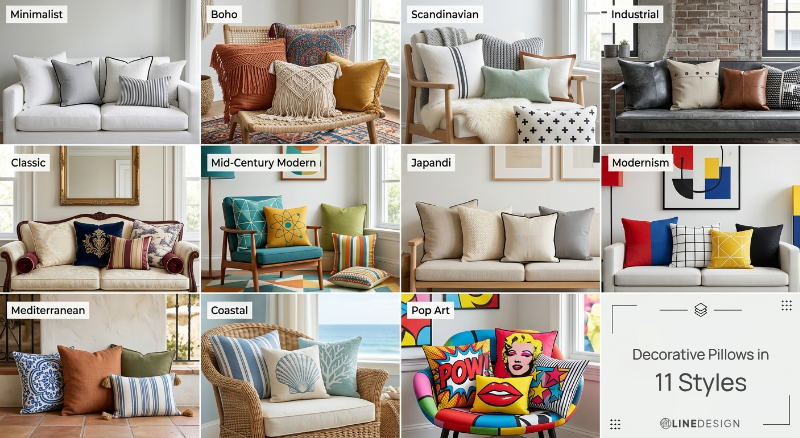
Minimalist Style: “Less but Better”
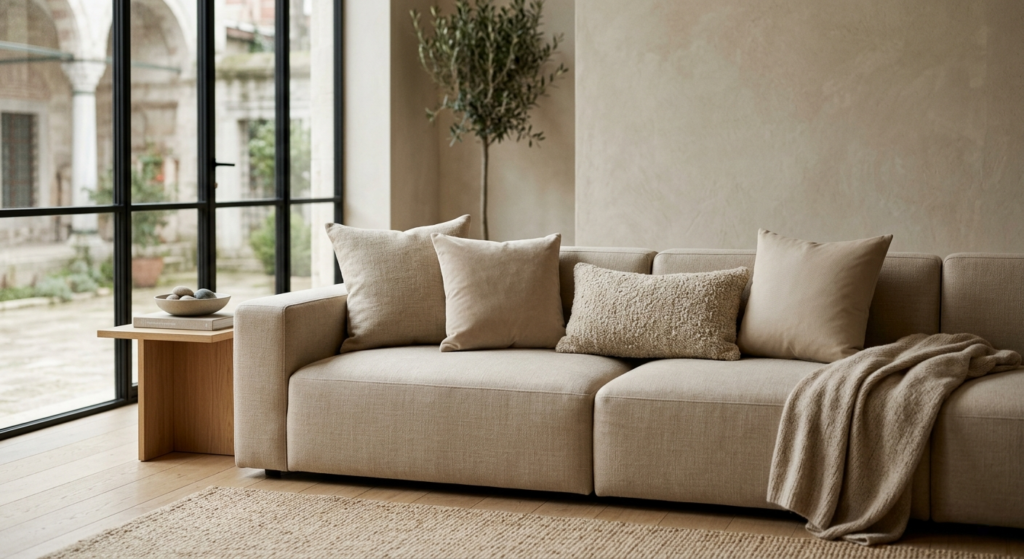
In minimalism, decorative pillows are not used to create visual clutter, but to emphasize comfort. This style relies on restrained forms, tonal layering, and subtle texture rather than busy patterns or decorative details.
Color Palette: Monochromatic (single color and its tones), white, grey, or beige. Texture: Smooth linen or plain fabrics with hidden seams. Create depth through texture differences. Strategy: Too many decorative pillows can conflict with minimalist simplicity. Avoid excessive patterns—create depth through texture and material quality instead.
Bohemian (Boho) Style: “Free and Eclectic”
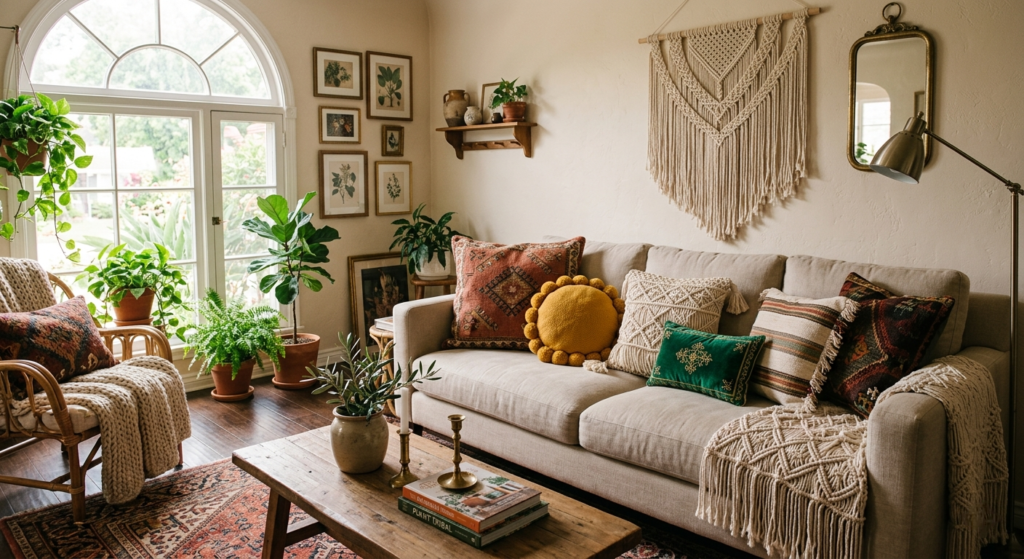
Boho style is a dance of textures and cultures. Here, the rule is: there are no rules.
Color Palette: Warm and vibrant tones such as terracotta, mustard yellow, and emerald green. Texture: Macrame weaves, tassels, pom-poms, and handwoven kilim patterns. Strategy: Mix different sizes and forms freely. Pair an ethnic patterned pillow with a textured, tasselled one to capture bohemian dynamism.
Scandinavian (Scandi) Style: “Hygge and Functionality”
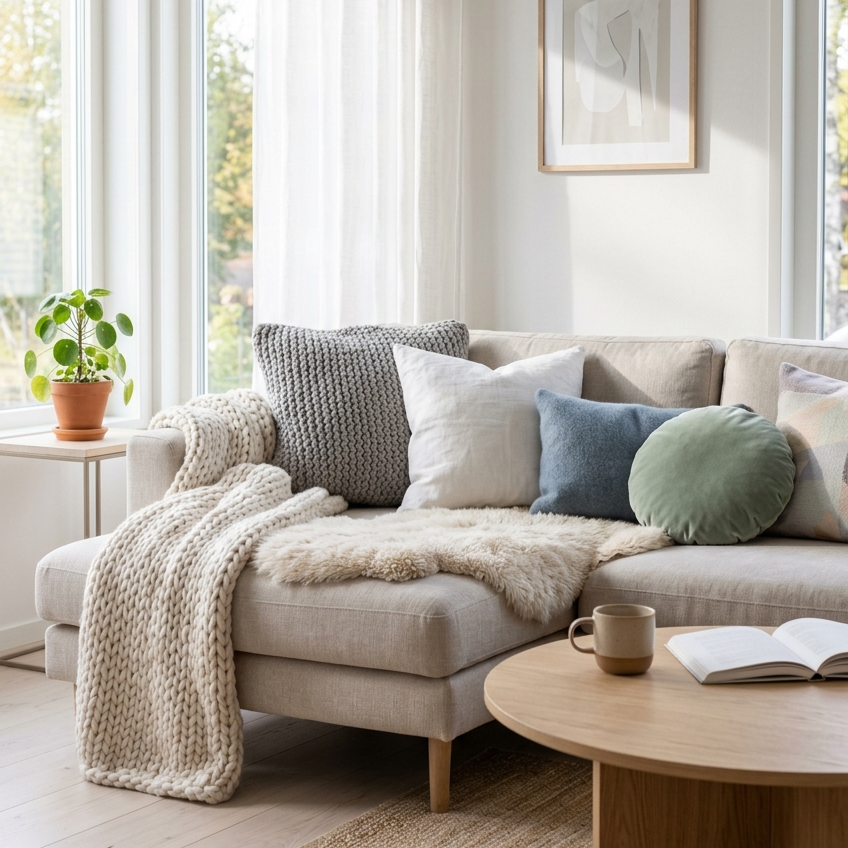
The goal of Northern European design is to create a bright and peaceful environment.
Color Palette: Pastel tones, soft greys, and plenty of white. Texture: Chunky knits, faux sheepskin textures, and natural cotton. Strategy: Use simple geometric patterns. Decorative pillows should look soft enough to invite you to curl up—this is key.
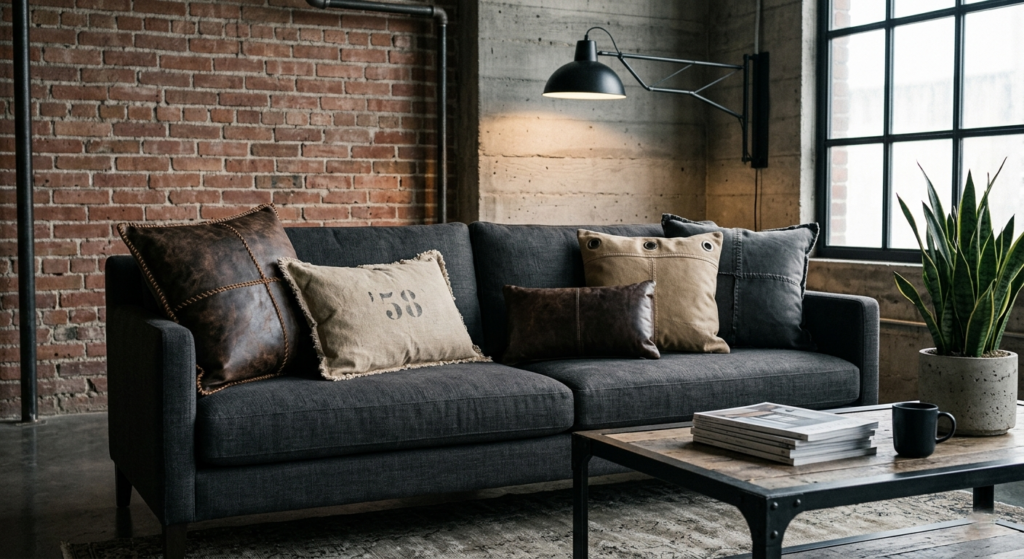
Inspired by factory aesthetics, this style highlights masculine and durable textures.
Color Palette: Charcoal, tan, dark brown, and anthracite. Texture: Aged leather, raw canvas, linen, and sometimes metallic-printed fabrics. Strategy: Combine leather decorative pillows with washed canvas fabrics. Oversized models with visible stitching suit this style perfectly.
Classic & Avant-Garde Style: “Elegance and Grandeur”
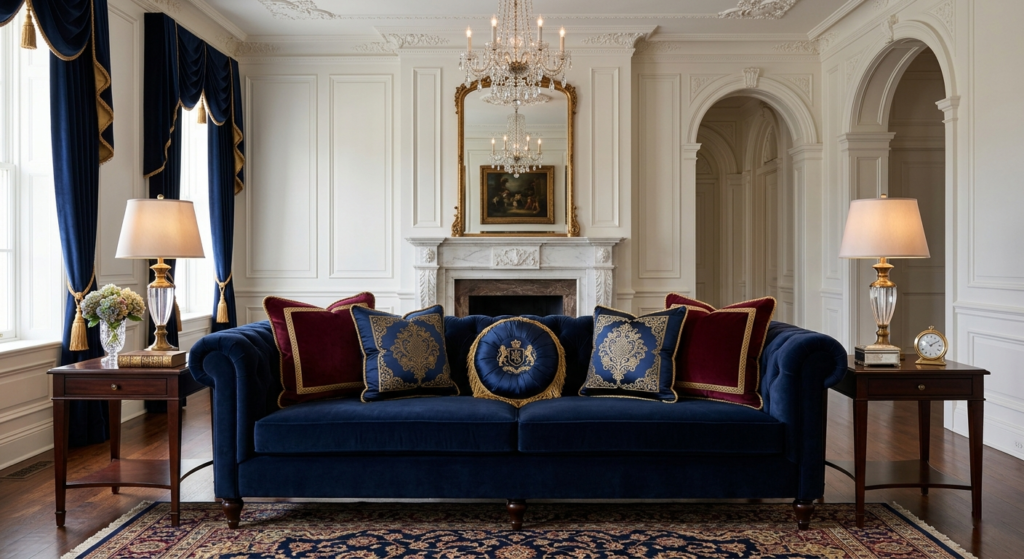
If you’re looking for traditional elegance, decorative pillows should signal luxury.
Color Palette: Gold accents, navy, burgundy, and silver tones. Texture: Velvet, silk, satin, and brocade fabrics. Strategy: Use piping or corded edges. Symmetry is critical—place decorative pillows in equal numbers and arrangements on both sides.
Mid-Century Modern: “Retro Geometry”
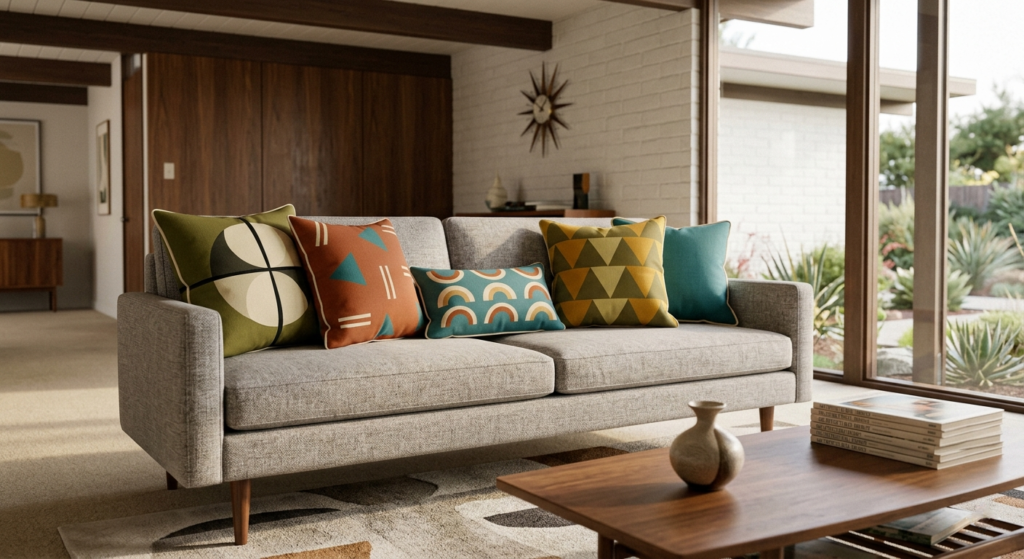
Focus on graphic forms inspired by the 50s and 60s.
Color Palette: Olive green, rust tones, and teal. Texture: Bouclé or flat-woven textiles. Strategy: Choose pillows with abstract geometric patterns (circles, triangles). Since they are often paired with furniture with thin legs, opt for more streamlined pillows that are not too puffy.
Japandi Style: “A Natural Balance”
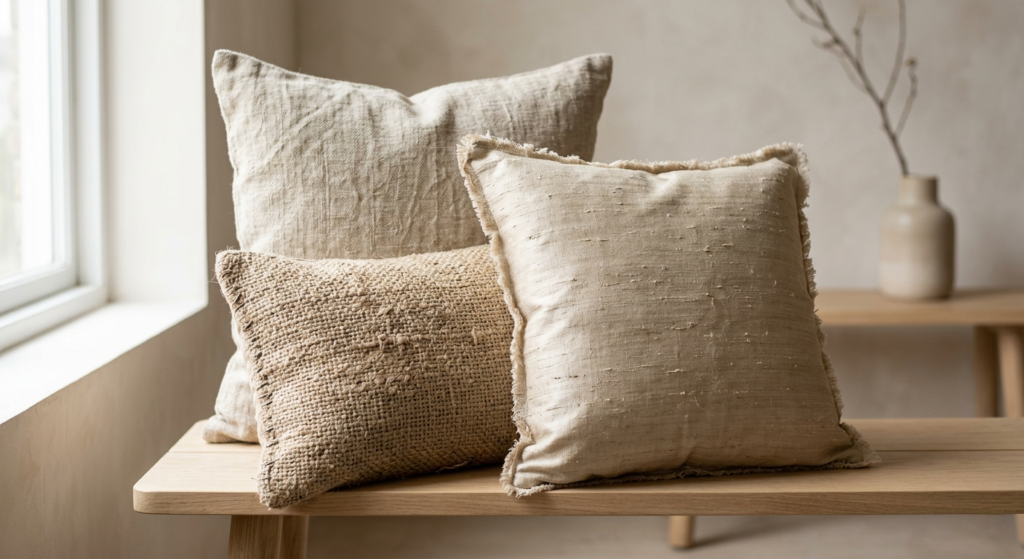
A blend of Scandinavian functionality and Japanese rustic minimalism. Its purpose is to create a peacefulandorganicsanctuary. In the Japandi style,naturaltones and linentextures take center stage.
Color Palette: Earth tones, oat shades, anthracite, and soft olive green. Texture: Raw silk, bamboo fibers, jute, and textured handmade linen. Strategy: Avoid perfection. Use a few imperfect, wabi-sabi-inspired decorative pillows in an asymmetrical yet balanced arrangement.
Modernism: “Form Follows Function”
A timeless approach based on clean lines and geometric precision.
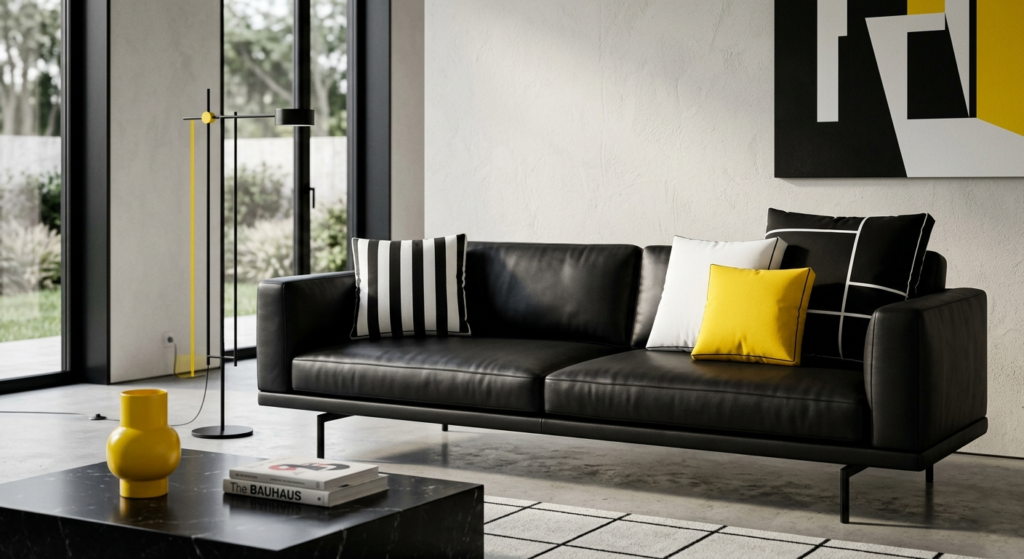
Color Palette: Black and white contrast or a neutral base with one bold accent color. Texture: Smooth leather, heavy canvas, or technical fabrics. Strategy: Stick to square forms. Highlight the architectural lines of the furniture with hard-filled “Boxy” pillows that have rigid edges and maintain their shape.
Mediterranean Style: “The Energy of the Sun”
Warm, inviting, and slightly rustic—reminiscent of Southern European coastal homes.
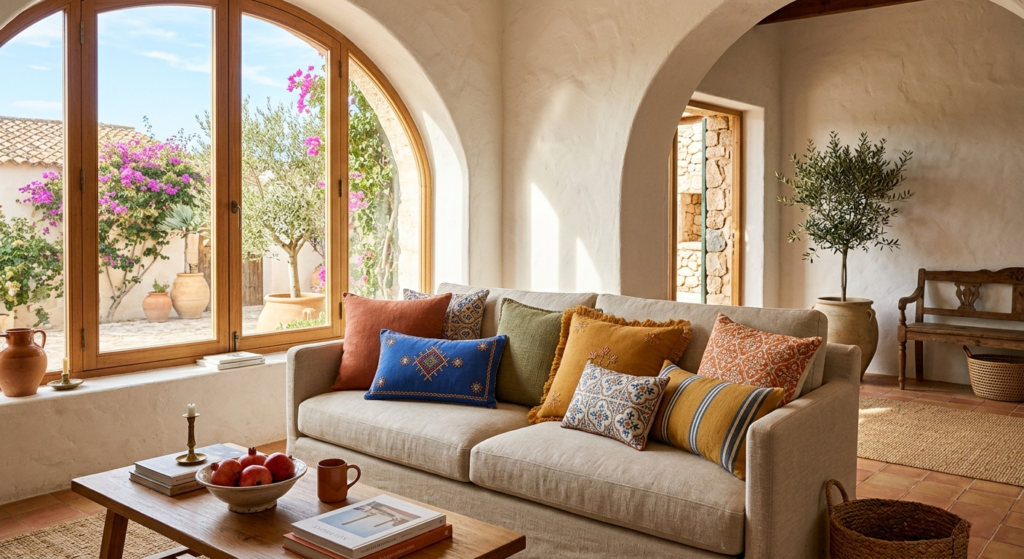
Color Palette: Terracotta, cobalt blue, olive tones, and warm mustard. Texture: Embroidered cotton, heavy linen, and tasselled textiles. Strategy: Create a feeling of “liveliness” by using plenty of pillows. When creating layers, add energy to the space by blending patterns (e.g. tile patterns) with solid colors.
Coastal Style: “Light and Airy”
It is a style that brings the tranquil sea breeze indoors, without tiring the eyes. Rather than focusing on the “sailor” theme (anchors, ships, etc. ) it centers on the spirit of the sea.
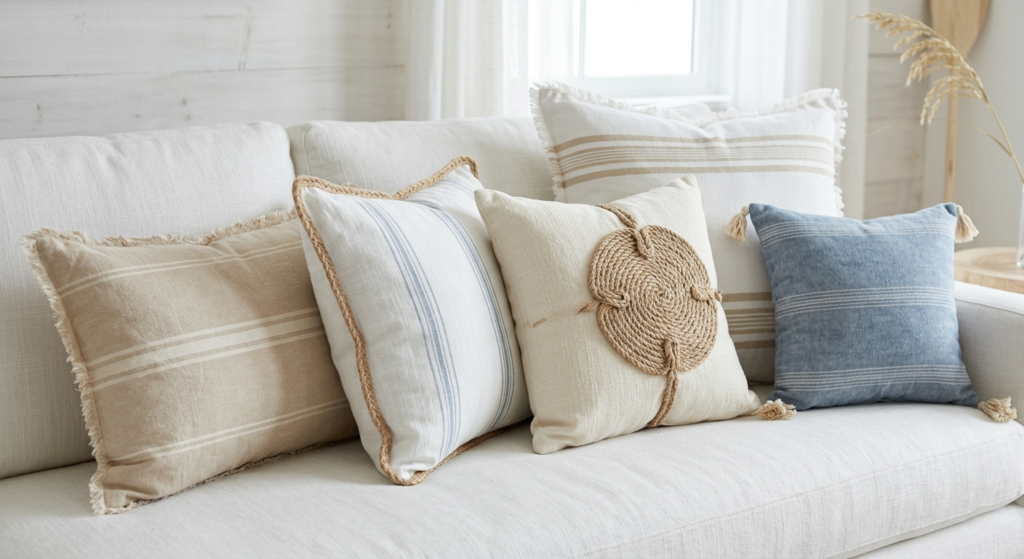
Color Palette: Sand beige, seafoam green, white, and sky blue. Texture: Lightweight cotton voile, rope details, and soft jute textures. Strategy: Use wide-spaced horizontal striped patterns. Instead of having very puffy pillows, pillows that appear soft and spread out support the “airy” atmosphere of the room.
Pop Art Style: “Bold and Playful”
A high-energy, expressive approach that turns the home into a gallery.
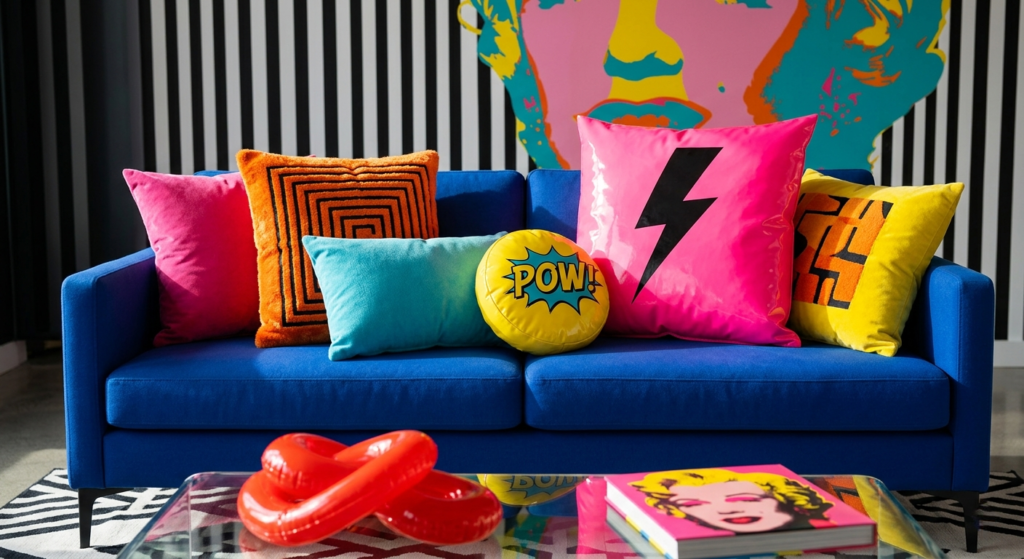
Color Palette: Electric pink, neon yellow, bright orange, vibrant turquoise. Texture: Glossy vinyl, faux fur, printed polyester, or plush. Strategy: Create a focal point. Place a bold, graphic or portrait-print decorative pillow at the center and let colors clash intentionally and don’t be afraid of the contrast.
As a result, decorative pillows are not just decorative—they are one of the strongest storytellers of a space’s style.
One of the most common mistakes in interior design is trying to make everything overly coordinated.
Using the same fabric for curtains and decorative pillows can make a space feel too rigid and lacking character. Instead, choose pieces that are harmonious—but not identical.
And remember: You don’t have to fill every space. Empty space is also part of the design.