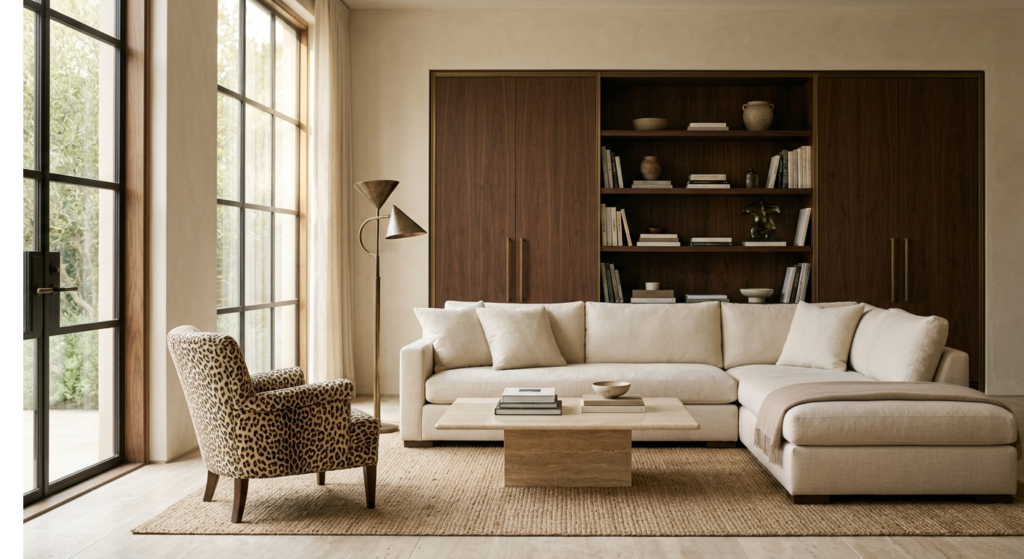
Leopard and Cheetah Print in Interior Design: How to Add Luxury Without Making a Space Look Cheap
Leopard and Cheetah Prints in Interiors: Maximalist Statement or Hidden Minimalism?
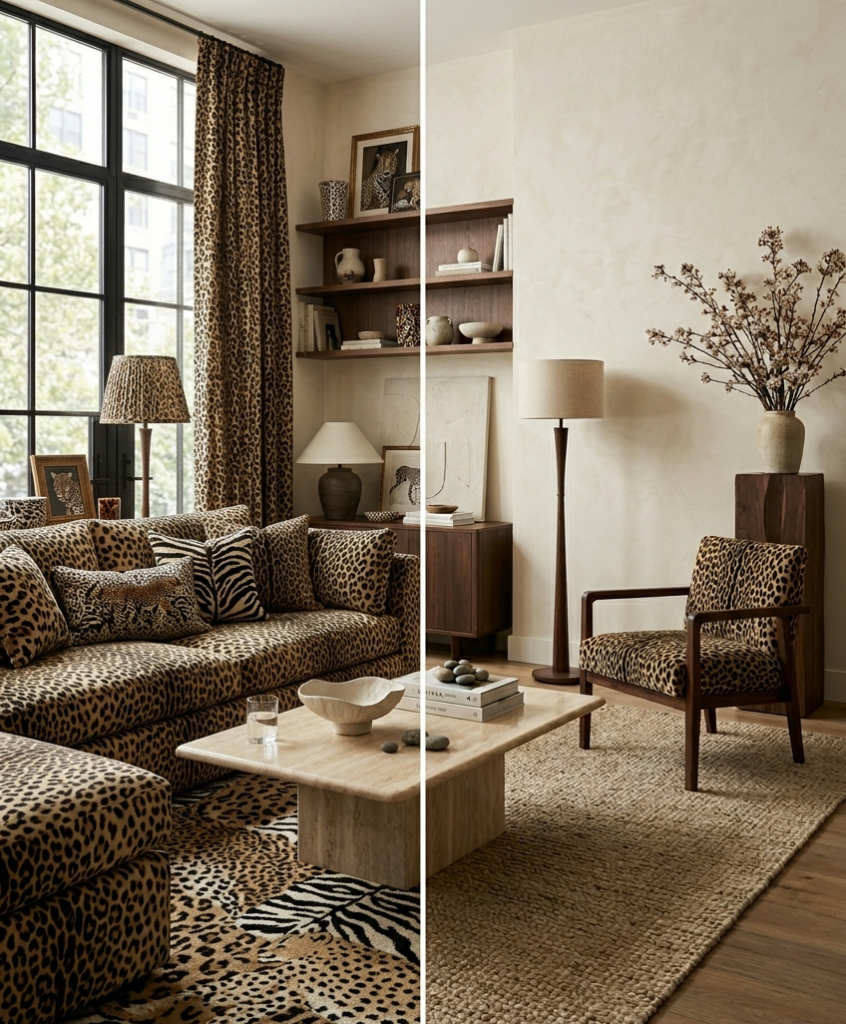
Animal prints have been a staple of fashion for decades. Yet when it comes to interior design, leopard and cheetah prints tend to spark two very different reactions: Some people see them as overly bold and dramatic, while others consider them an essential ingredient in creating luxurious, character-filled spaces.
The truth is, when used correctly, leopard and cheetah prints can elevate a space from ordinary to unforgettable. Contrary to popular belief, these patterns are not reserved exclusively for glamorous or maximalist interiors. When scaled perfectly, they can produce stunning results in modern, classic, eclectic, and even minimalist designs.
Why Are Leopard and Cheetah Prints So Powerful in Interior Design?
These patterns originate from nature, which creates an instinctive sense of familiarity and visual interest.
Their organic, irregular shapes naturally attract the eye.
Unlike geometric patterns, they feel fluid, spontaneous, and effortless.
They add movement and energy to a space.
Compatible with neutral color palettes easily.
Many people view leopard print as “extravagant,” but since it’s technically composed of black, brown, beige, and caramel tones, it essentially functions as a neutral pattern.
Not in the Lead Role, but in the Spotlight: The Leopard Pattern as a Design Tool
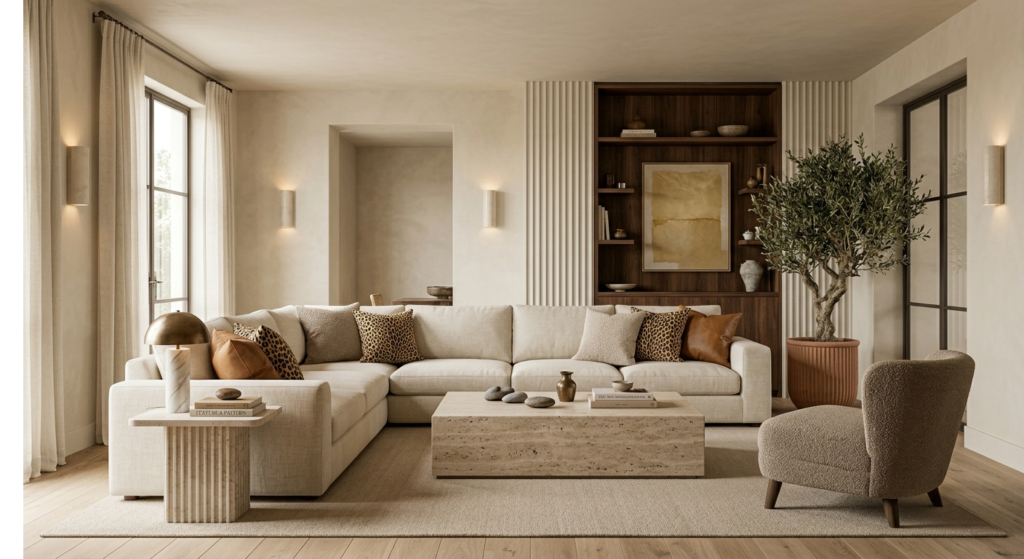
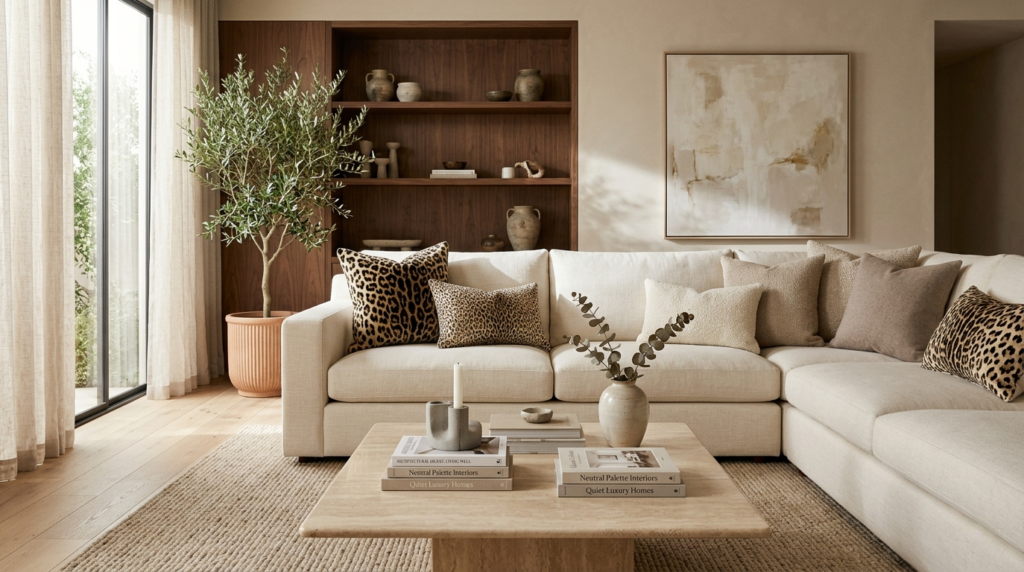
Leopard print works best as a supporting character rather than the main attraction.
When used correctly, it can bring:
Movement and visual interest
Layering and depth
Warmth
Character
A sense of timeless luxury
to a space without overwhelming it.
The most successful interiors rarely rely on leopard print as the focal point. Instead, they use it strategically to elevate the overall design.
Achieving the Perfect Balance: The 60-30-10 Rule in Interior Design
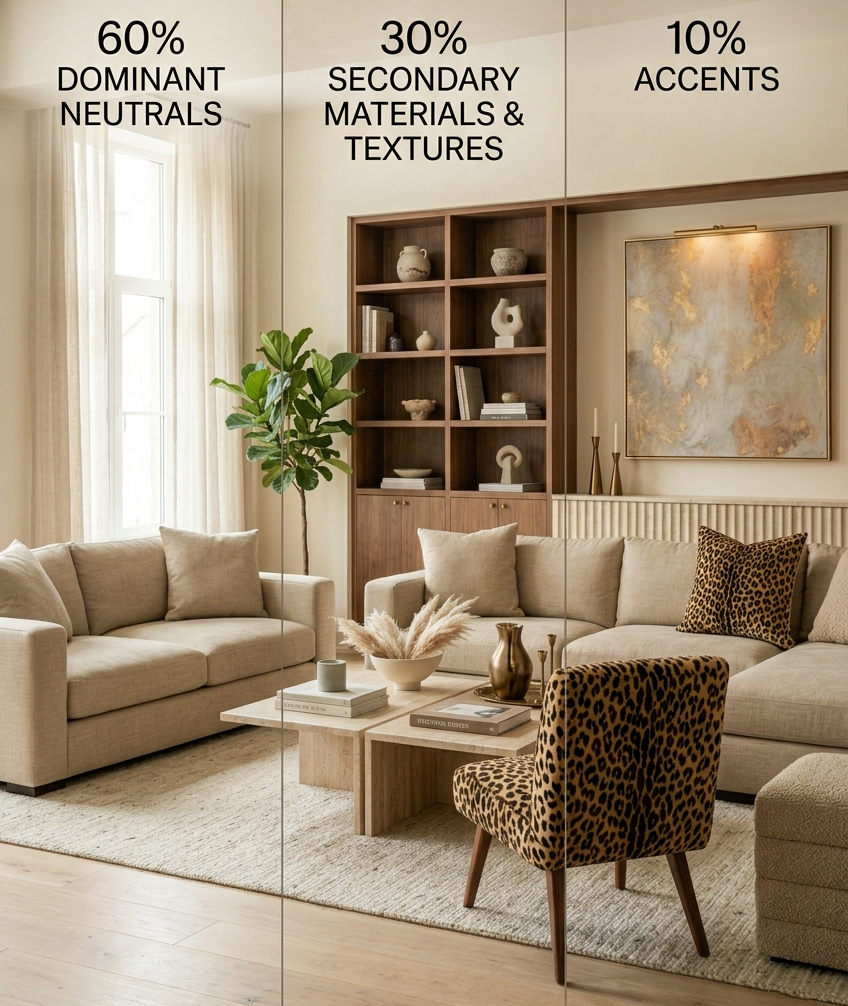
One of the easiest ways to incorporate leopard print is by following the classic 60-30-10 design principle. In most interiors:
60% should be your dominant neutral colors
30% should be secondary materials and tones
10% should be accents such as leopard print, artwork, and accessories
This simple formula helps maintain balance while allowing bold details to make an impact.
Leopard print almost always belongs in that final 10%.
The "Less Is More" Philosophy: Think of Leopard Print as a Color, Not a Pattern
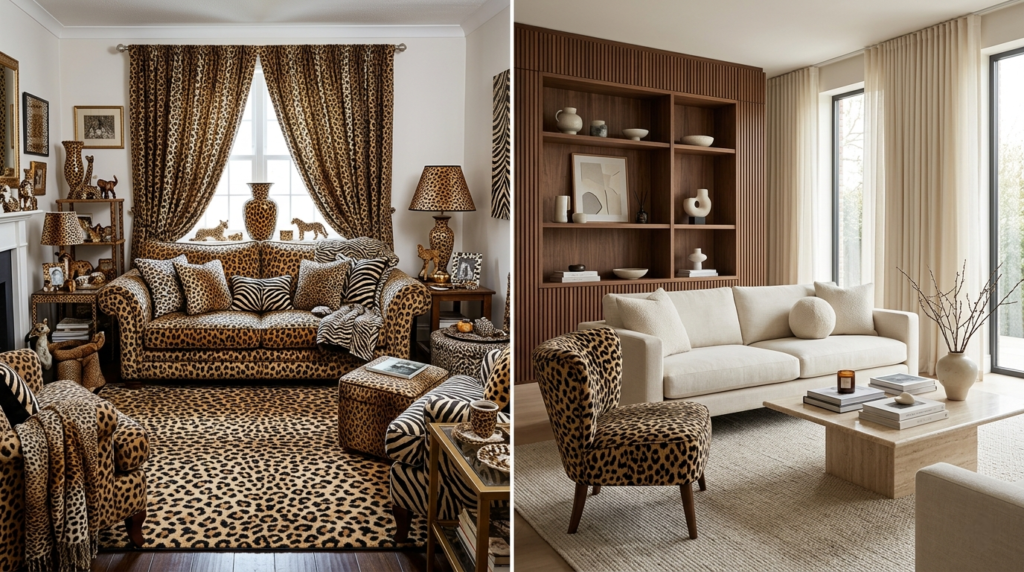
One of the most common mistakes make is using too much leopard print at once.
A room filled with a leopard-print sofa, rug, curtains, and accessories can quickly feel busy and overwhelming. Professional designers typically treat leopard print as an accent rather than a dominant design feature.
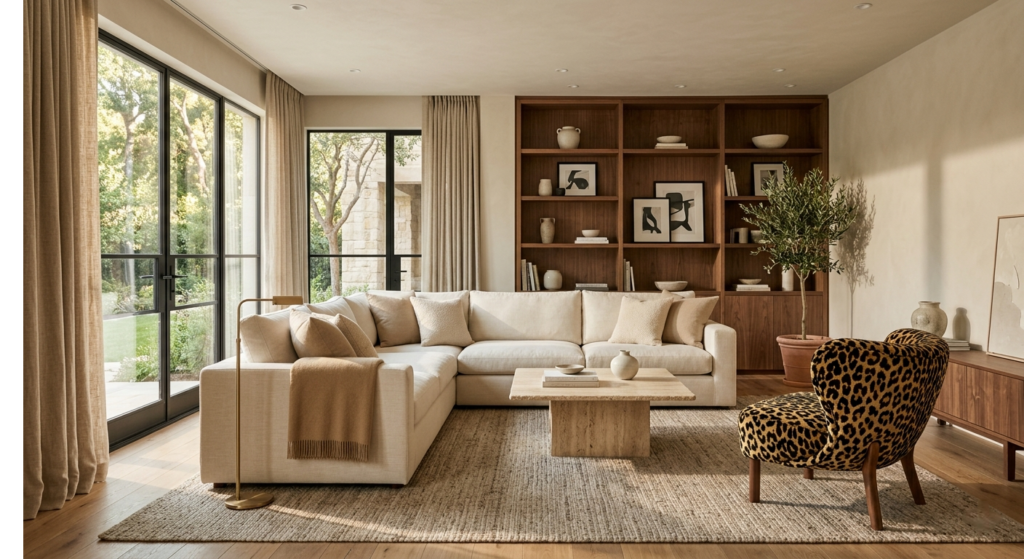
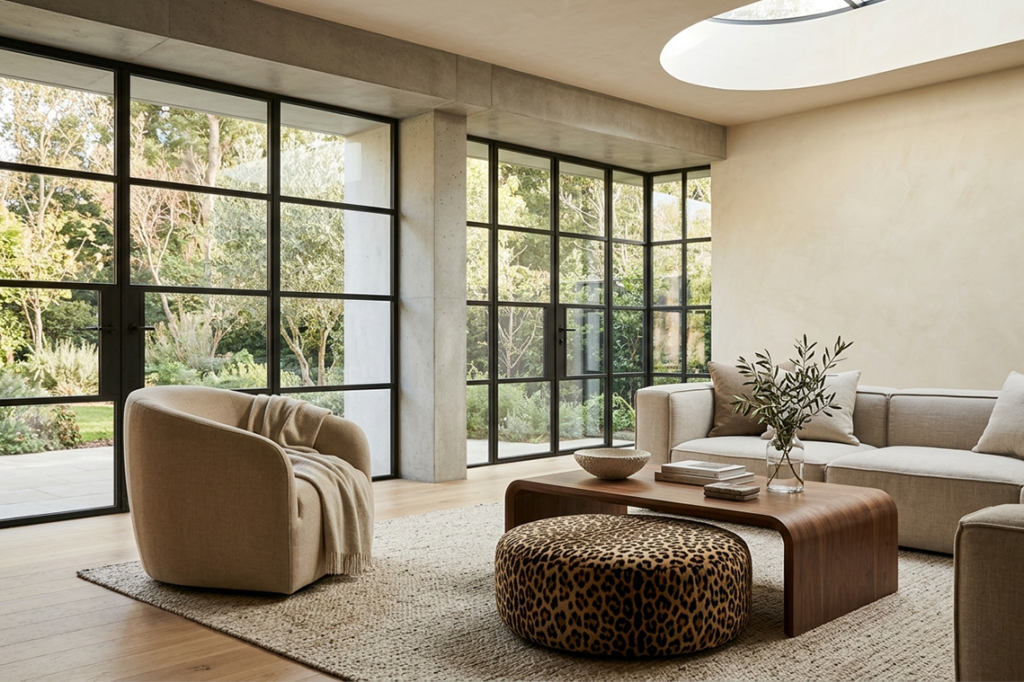
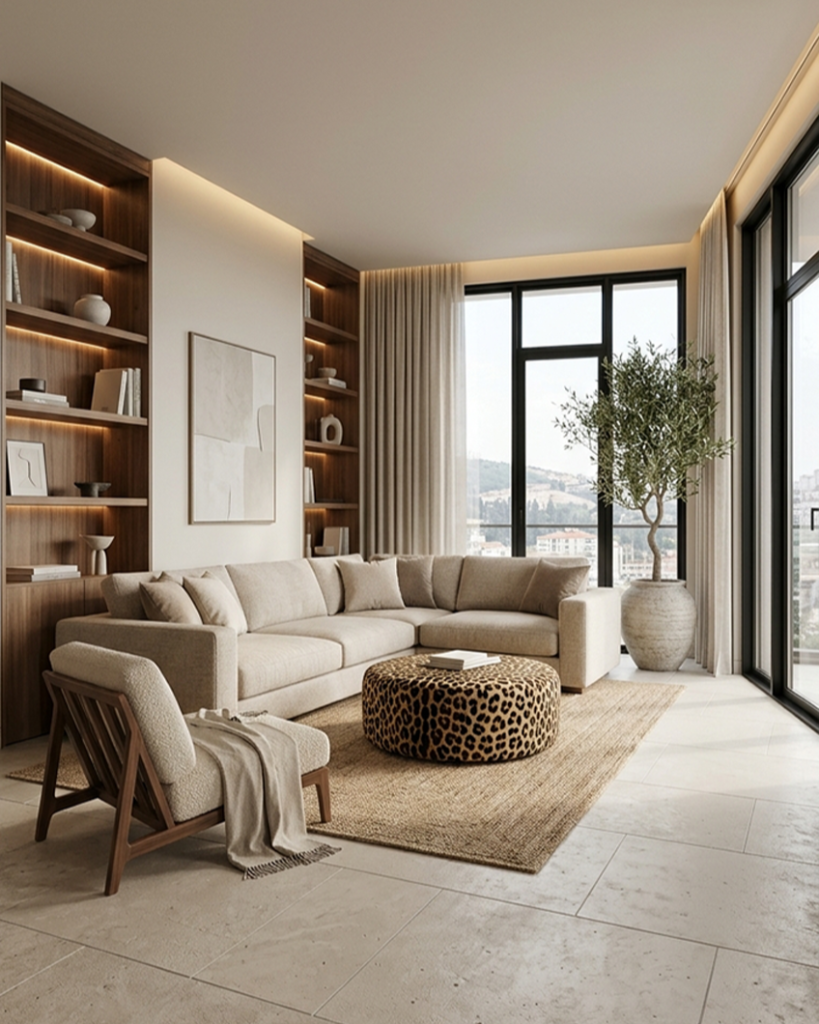
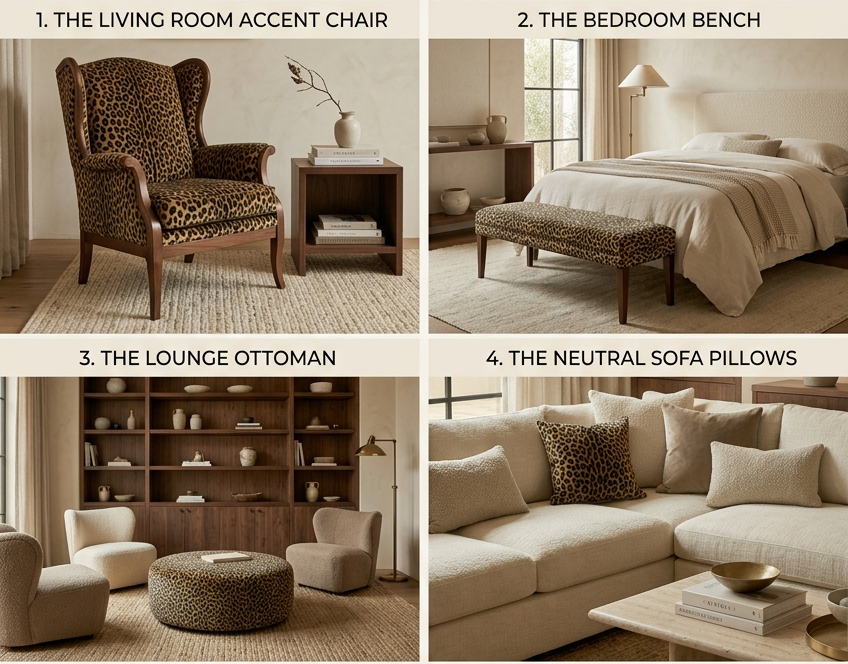
A single accent chair, ottoman, decorative pillow, or statement artwork is often enough to bring personality to an entire room.
There is a popular saying among interior designers:
“Think of leopard print as a color, not a pattern.”
This mindset helps the print becomes unobtrusive and becomes a natural, seamless part of your design.
Color Pairings: What Colors Work Best with Leopard Print?
One reason leopard print is so versatile is that it already contains a limited, earthy color palette.
Safe and Timeless Combinations
Cream
Beige
Sand
Caramel
Taupe
Brown
These combinations create warm, elegant, and sophisticated interiors that never feel dated.
Bold and Dramatic Combinations
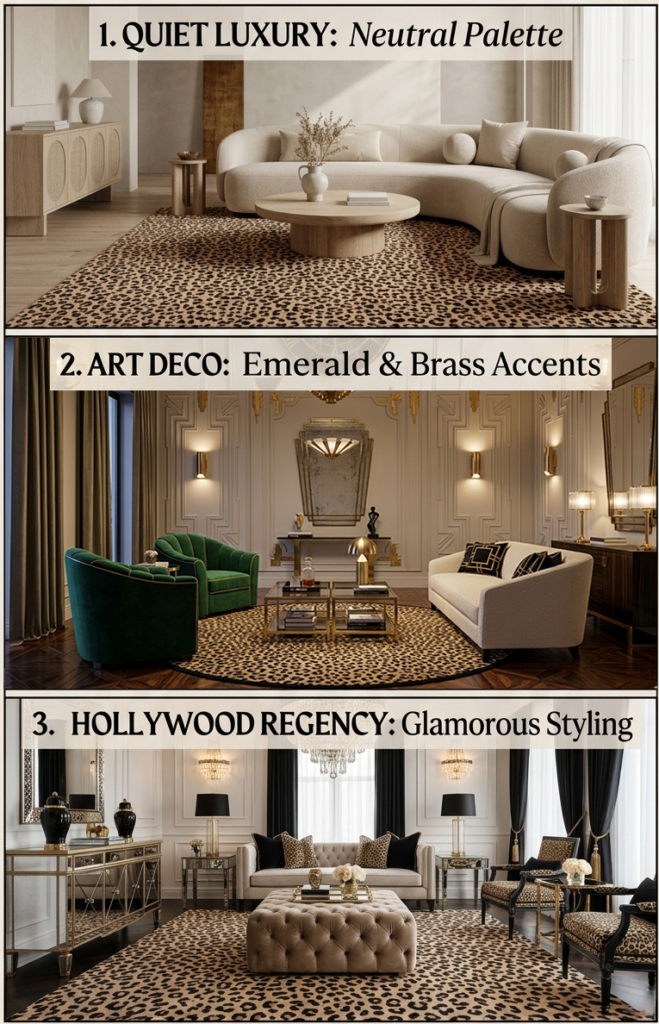
Emerald green
Navy blue
Burgundy
Black
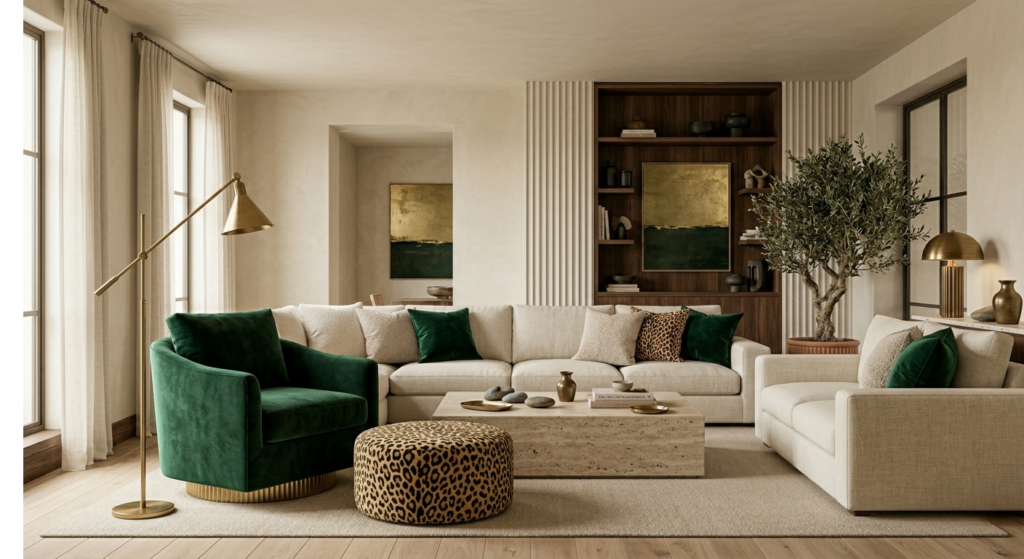
One of the most luxurious combinations in interior design is undoubtedly:
Emerald Green + Brass + Leopard Print
This trio creates a rich, layered look that feels both glamorous and timeless.
Creating a Focal Point: The Best Places to Use Leopard Print
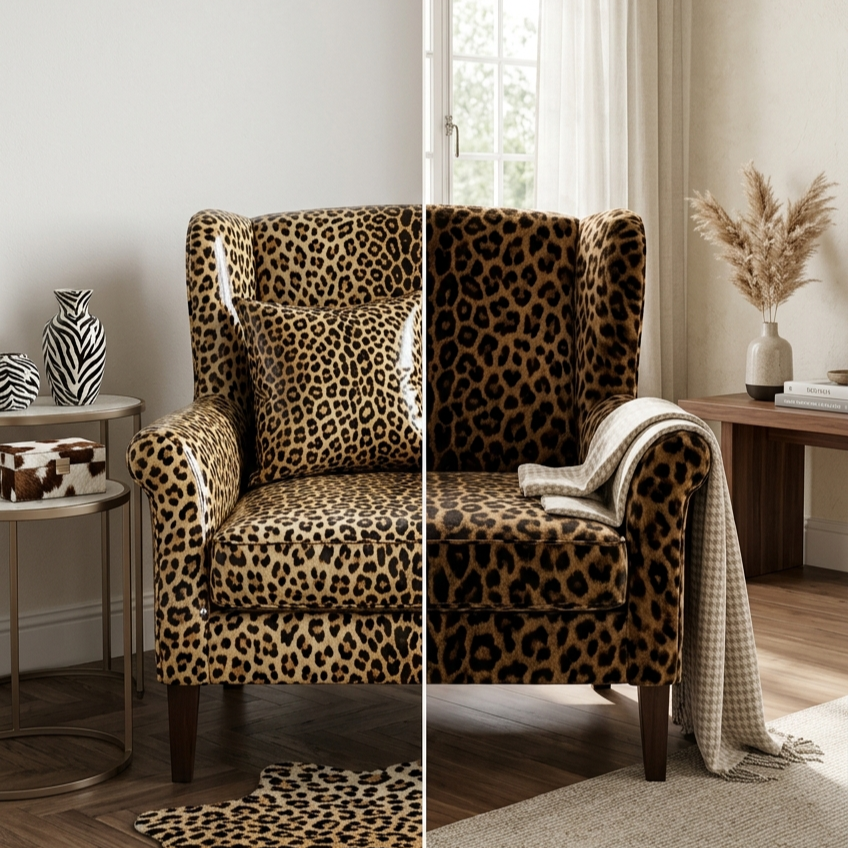
Leopard print is often most successful when used on smaller-scale furniture pieces where the pattern can be appreciated without dominating the room.
Particularly effective applications include:
Accent chairs
Benches
Ottomans and poufs
Because these pieces occupy a smaller visual footprint, the pattern remains impactful without taking over the space.