Outdoor Living: How to Bring Comfort and Aesthetics Into Your Garden
Outdoor spaces are no longer treated as secondary parts of the home. Today, balconies, terraces, verandas, and gardens are designed as true extensions of interior living. A well-designed outdoor area not only increases the value of a home but also improves your overall well-being. From an architect’s perspective, here are the golden rules for outdoor furniture and seating areas:
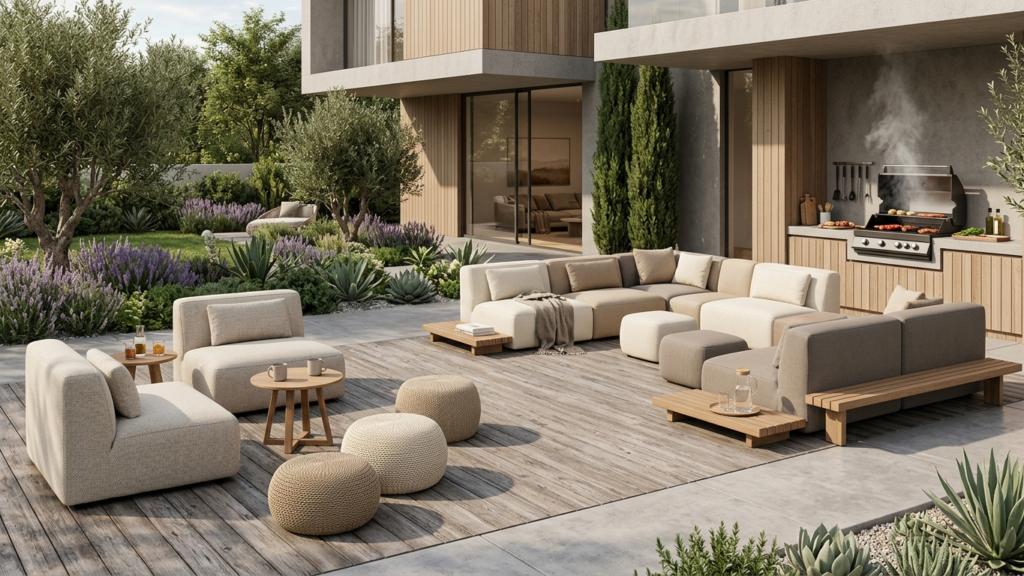
1. Divide the Space Into “Zones”
A large terrace or garden can easily feel empty and undefined if it is not planned properly. Just like in interior design, outdoor areas should be organized into functional zones.
How to Do It
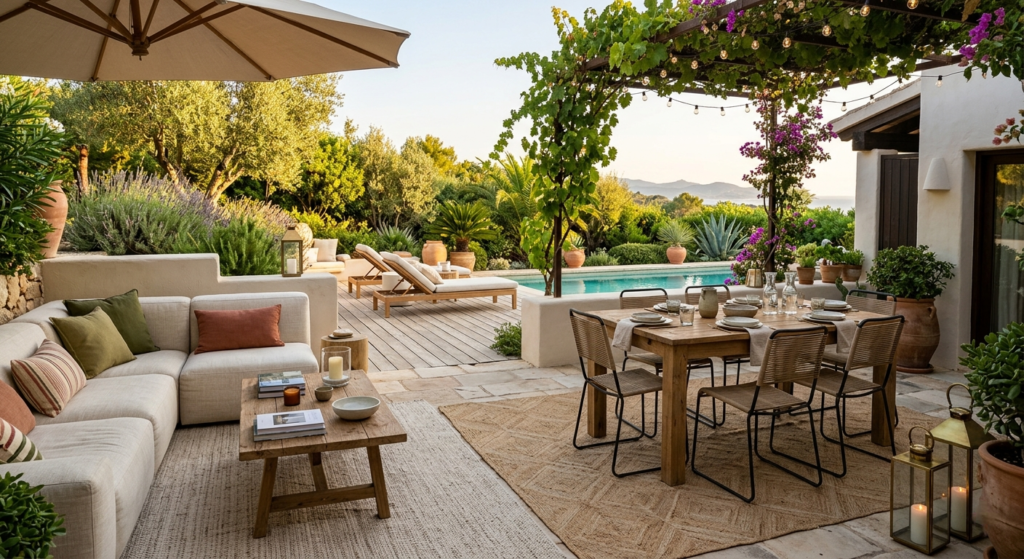
Separate the space into areas for dining, sunbathing, and lounging. Outdoor rugs or different flooring materials such as wood decking, stone, or concrete can help visually define each zone.
2. Think of Outdoor Spaces as “Open-Air Interiors”
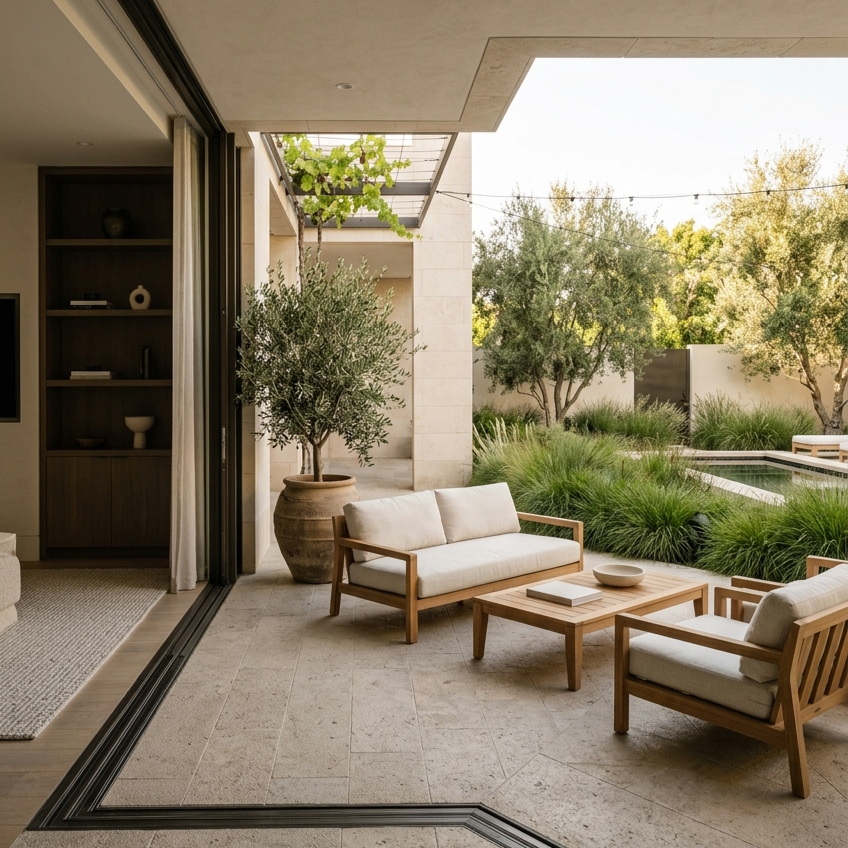
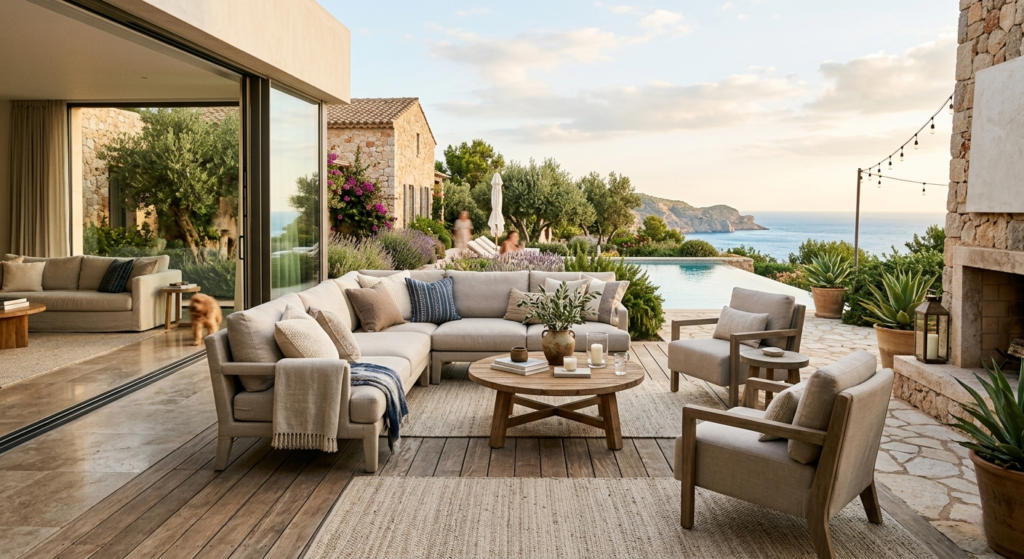
One of the biggest design mistakes is treating outdoor spaces as completely separate from the home. The most successful outdoor areas feel connected to the interior through material continuity, color harmony, and a consistent furniture language.
A terrace should never feel like a random collection of furniture placed outside. It should feel like an outdoor living room.
Design Tip
Create a visual flow by using similar tones, textures, and materials both indoors and outdoors.
For example:
Wooden details used indoors can continue outdoors with teak furniture.
Neutral linen tones can be repeated through outdoor cushions.
Stone or concrete textures can create continuity between interior and exterior flooring.
This approach creates architectural cohesion and makes the home feel visually larger.
3. Durability Should Always Come First When Choosing Outdoor Furniture
No matter how beautiful furniture looks, if it cannot withstand outdoor conditions, it quickly loses its value. In outdoor design, the balance between aesthetics and performance is essential.
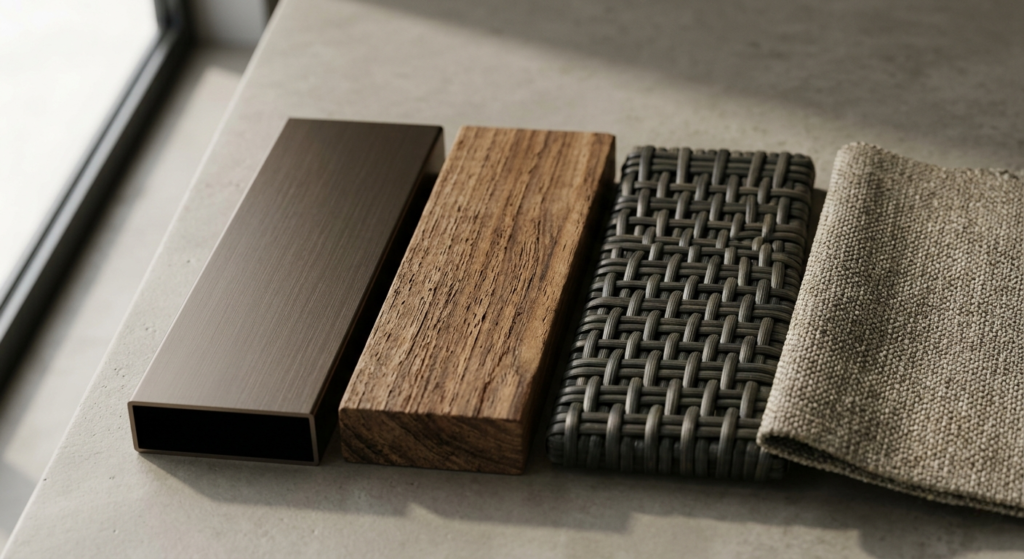
Best Materials for Outdoor Furniture
Aluminum
Lightweight structure
Rust-resistant
Modern appearance
Easy maintenance
Ideal for minimalist and contemporary outdoor spaces.
Teak Wood
Naturally resistant to outdoor conditions
Develops more character over time
Premium aesthetic appeal
Perfect for luxurious terraces and warm, natural atmospheres.
Synthetic Rattan
More durable than natural rattan
UV-resistant
Works beautifully with bohemian and coastal styles
Performance Fabrics
Always choose fabrics specifically designed for outdoor use:
Fade-resistant
Water-repellent surfaces
Mold-resistant
High-quality outdoor textiles significantly improve both the lifespan and visual quality of a seating area.
4. The Hidden Hero of Comfort: Textiles
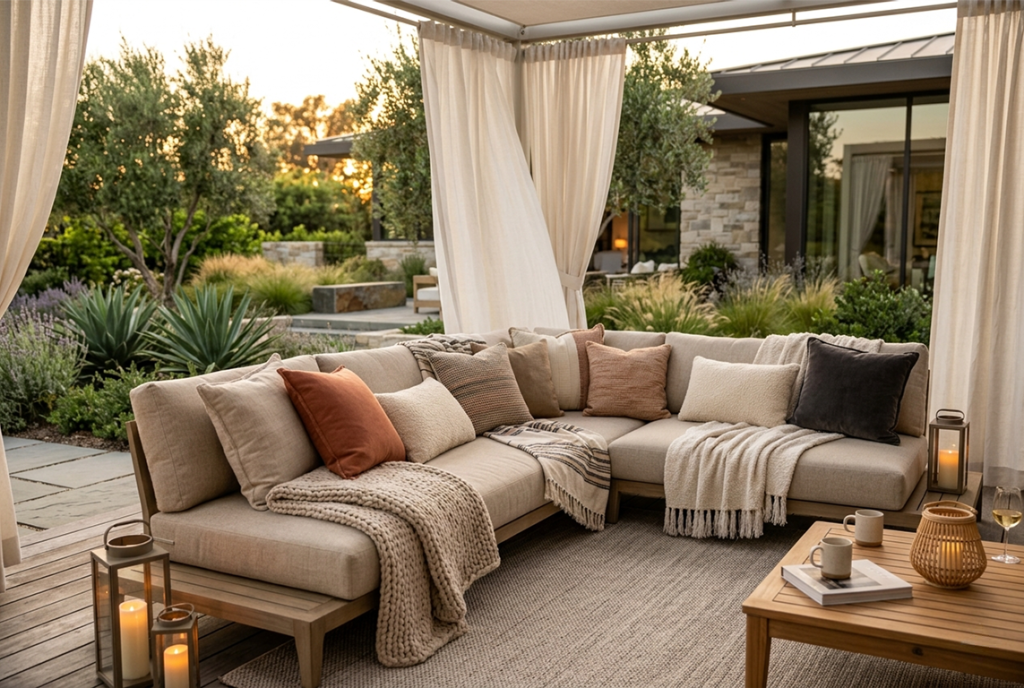
Textiles are what transform furniture into a real living experience. Without cushions, rugs, and layered fabrics, outdoor spaces often feel incomplete and cold.
Fabric Technology: You should choose fabrics that are water-repellent, quick-drying, and do not fade under sunlight (such as solution-dyed acrylic). Additionally, you may consider Olefin fabrics, UV-resistant pillow covers, and water-repellent outdoor rugs.
Layering: Comfort comes from layering. Add stylish throws for cooler evenings or outdoor curtains to create depth and softness within the space.
5. Create Drama With Lighting
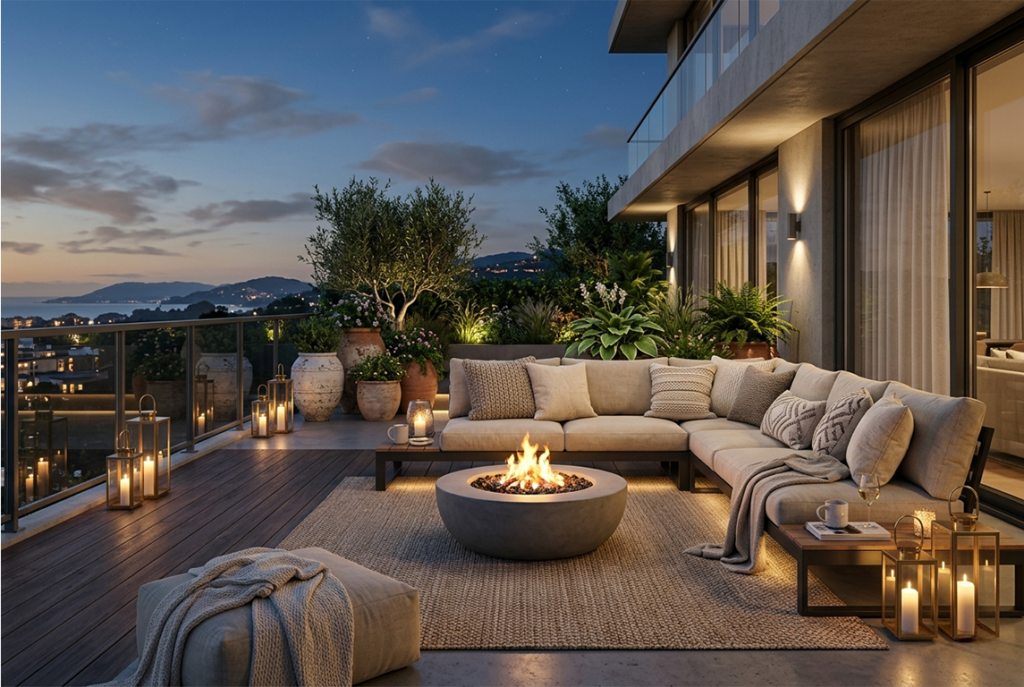
You do not want your entire design to disappear once the sun goes down. Poor lighting can make even the highest-quality furniture feel cold and lifeless. A single harsh white light can make a garden resemble a sports field rather than a relaxing retreat.
Outdoor Lighting Ideas
Warm LED strip lighting
Solar garden lights
Hanging lanterns
Wall sconces
String lights
Hidden indirect lighting
Professional Tip: Warm lighting always creates a softer and more luxurious atmosphere compared to cool white lighting. The goal is not brightness — it is intimacy.
Create layered lighting: Use uplights that shine from the ground, under-tree lighting, ceiling lights, and stylish rechargeable table lamps. Distributing light throughout the space creates depth and atmosphere.
6. Use Flexible and Modular Pieces
Outdoor spaces are social environments. Some days it is just two people having coffee; other days it becomes a gathering for ten around a barbecue. Your furniture should adapt to different scenarios.
Flexibility Matters
Modular sofas, movable poufs, and lightweight benches allow you to transform the layout within seconds depending on your needs.
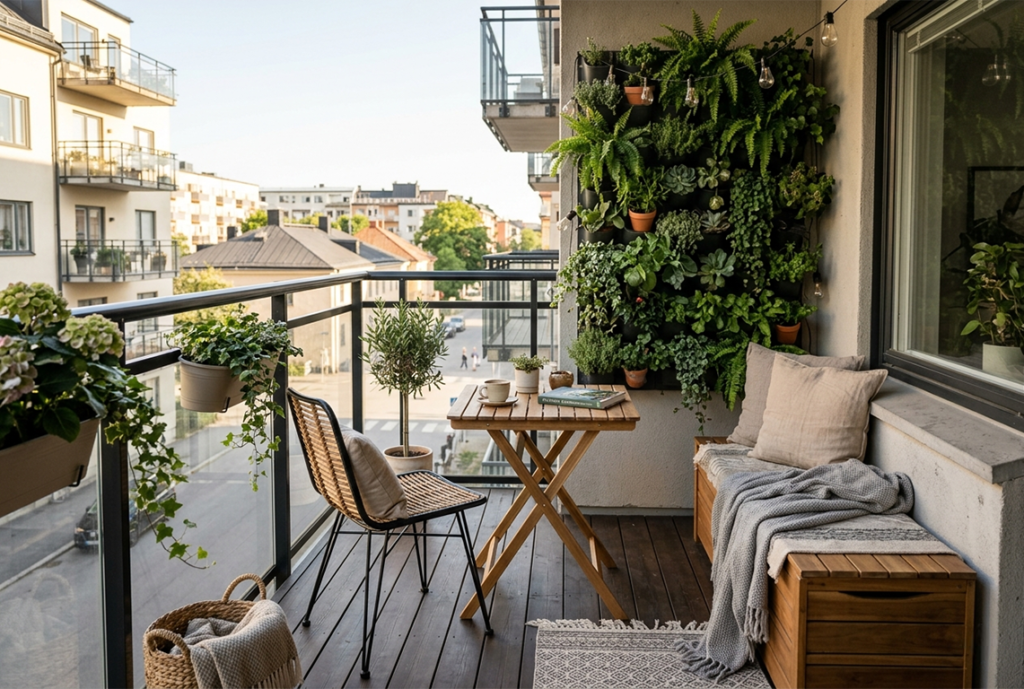
7. Small Balconies Can Still Feel Luxurious
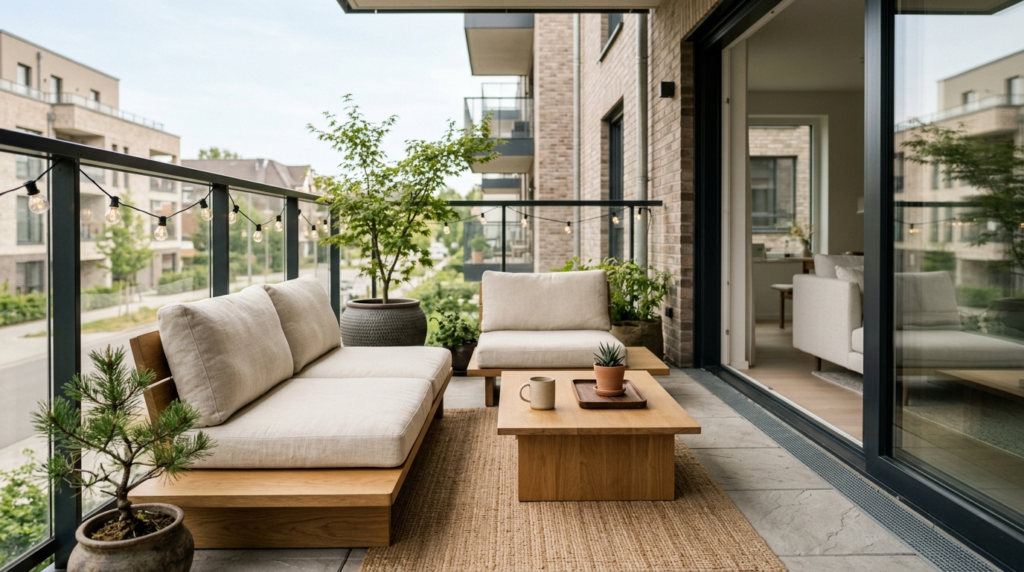
Limited square footage does not prevent great design. In fact, some of the most impressive outdoor spaces are cleverly designed small balconies.
Smart Ideas for Small Balconies
Foldable furniture
Modular seating
Built-in storage benches
Slim-profile chairs
Vertical planting systems
Architectural Perspective
Visual lightness is extremely important in small spaces. Furniture with slender legs, light tones, and designs that leave the floor exposed make the space feel more spacious. Oversized and bulky furniture should always be avoided in narrow spaces.
8. Create a Lounge Atmosphere Through Layering
Luxury outdoor spaces are not created only with expensive furniture. Atmosphere is built through layers.
Details That Create a Boutique Hotel Feeling
Outdoor rugs
Oversized cushions
Lanterns
Warm ambient lighting
Throws and textured textiles
Fire pits or outdoor fireplaces
Decorative planters
The goal is not visual clutter, but emotional warmth. A well-layered outdoor area feels inviting both during the day and at night.
9. Choose a Clear Design Language
A consistent design language prevents outdoor spaces from feeling chaotic or disconnected.
Popular Outdoor Design Styles
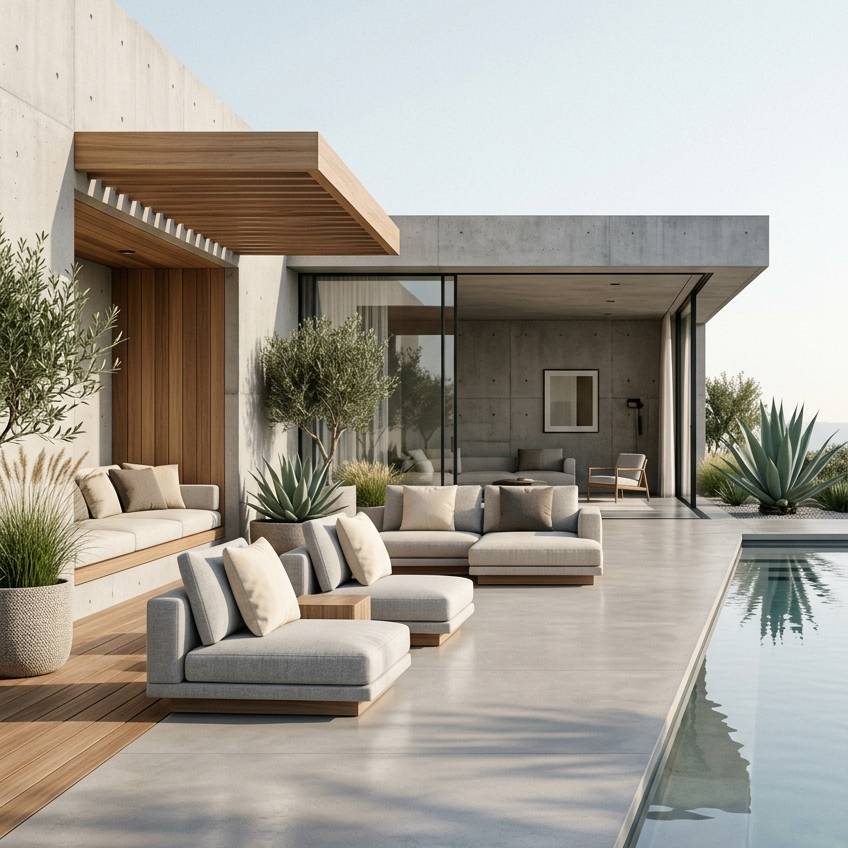
Minimalist Outdoor
Clean lines
Neutral palettes
Functional layouts
Low visual density
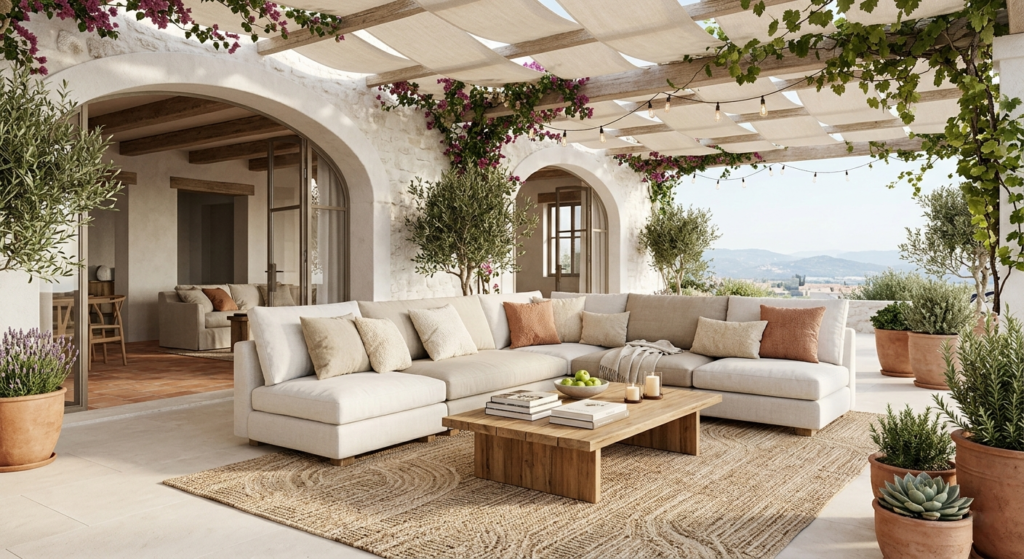
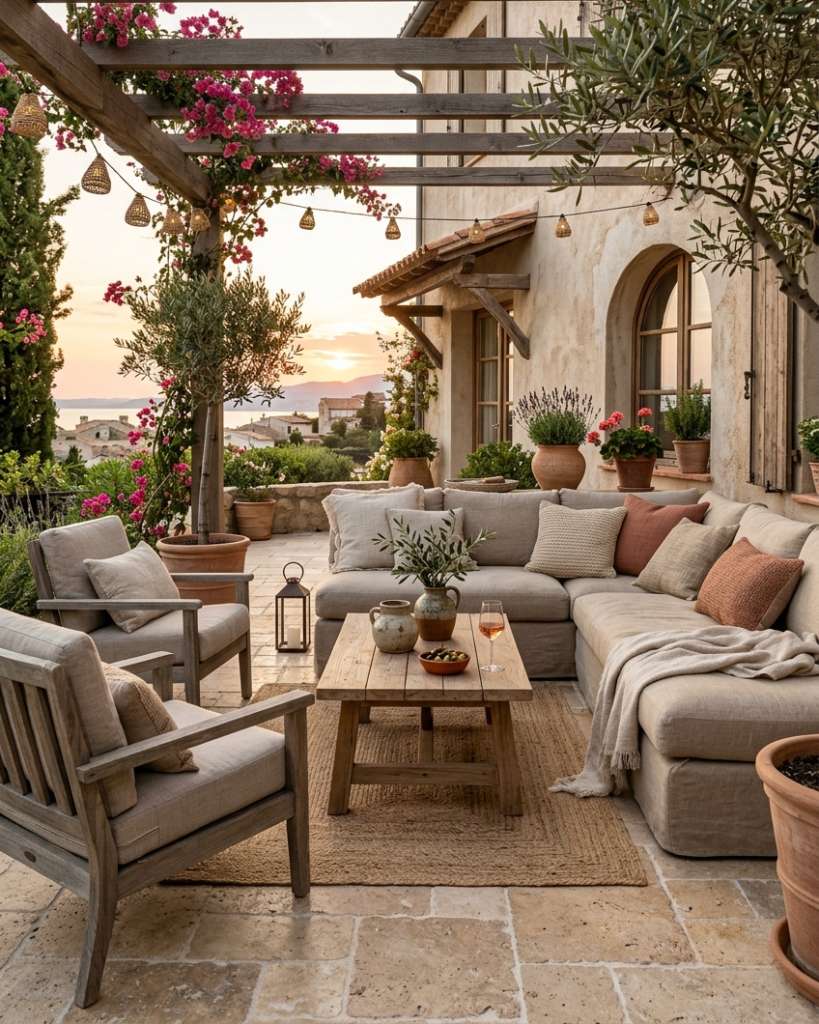
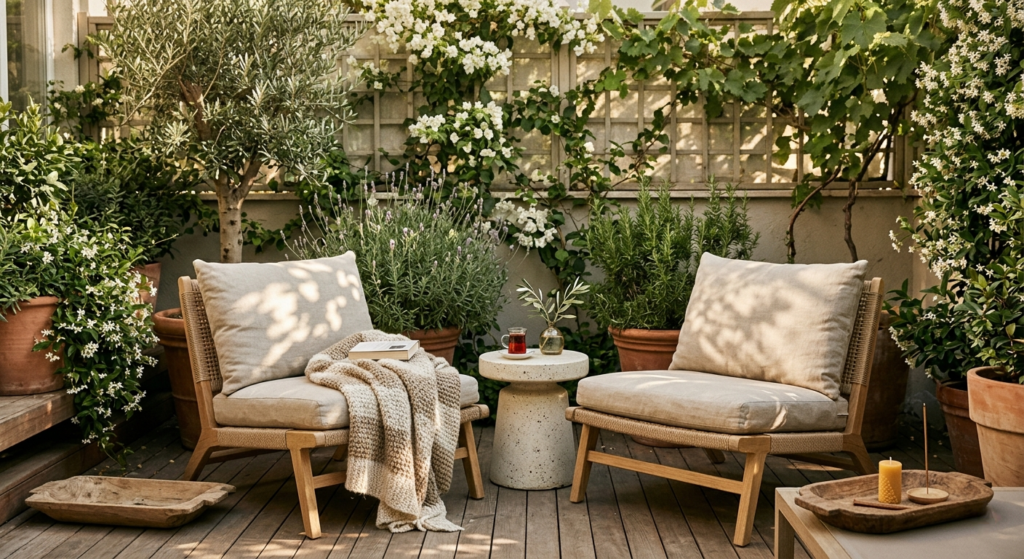
Mediterranean Terrace
Warm stone textures
Terracotta tones
Olive trees
Natural linen fabrics
Japandi Outdoor
Organic minimalism
Soft wood textures
Calm earth tones
Low-profile furniture
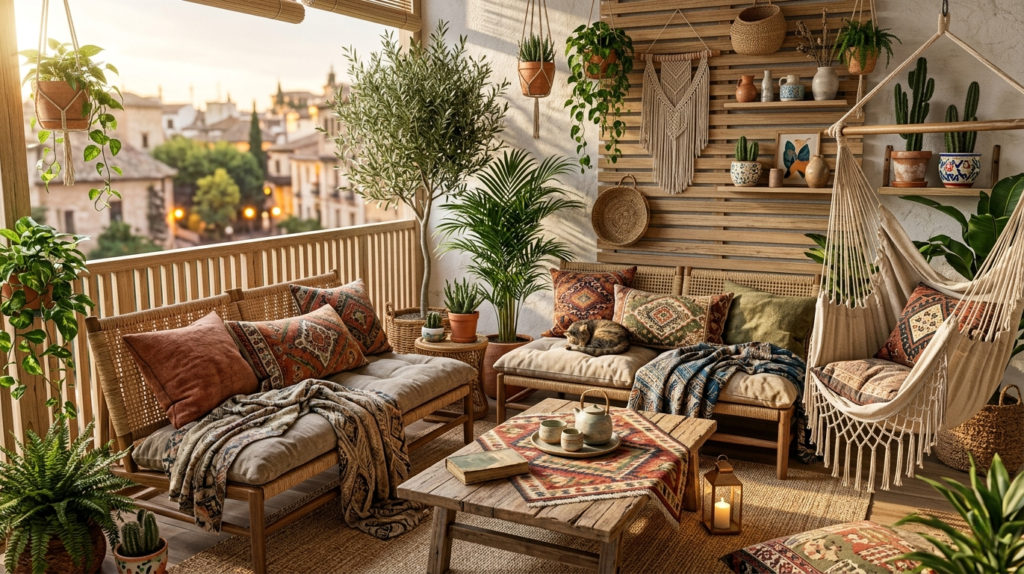
Bohemian Balcony
Layered textiles
Relaxed seating arrangements
Woven textures
Abundant greenery
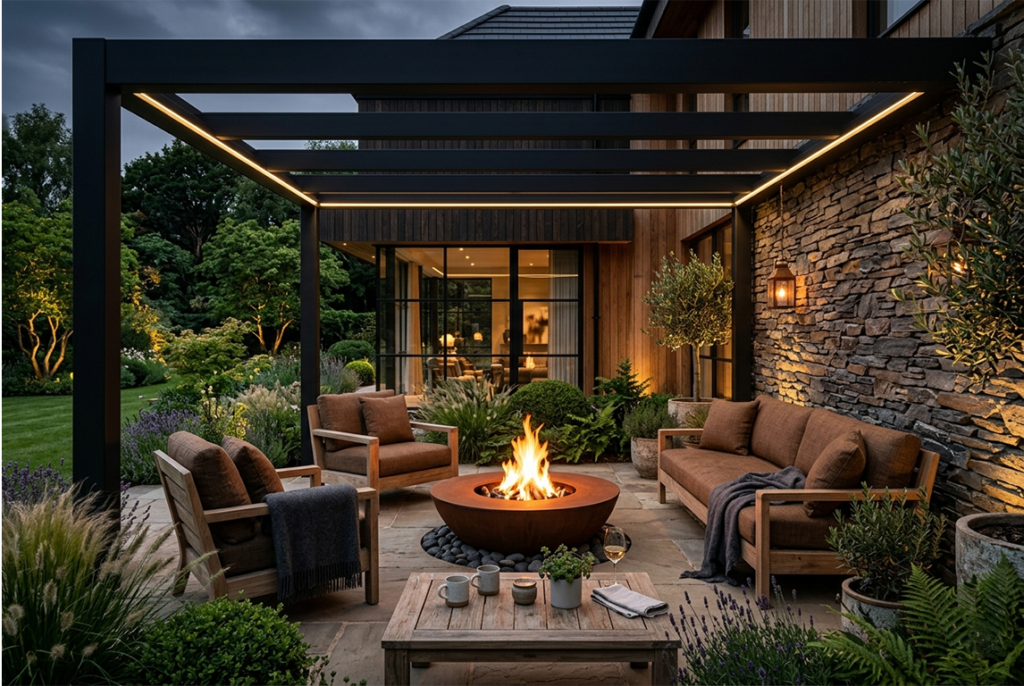
Modern Rustic Garden
Natural wood
Black metal accents
Organic surfaces
Warm architectural atmosphere
Consistency always creates a more sophisticated result.
Plants should never feel like accessories added at the last minute. They should be integrated into the architecture of the space itself.
Best Plants for Outdoor Areas
Olive trees
Lavender
Ornamental grasses
Bamboo
Rosemary
Climbing vines
Design Principle
Use plants at different heights to create softness and depth around the seating area. Nature should frame the outdoor living experience.
BONUS: The Most Common Outdoor Design Mistakes
Mistake #1: Buying Furniture Before Planning the Layout
Always plan circulation and usage scenarios first.
Mistake #2: Forgetting Shade
Without shade, outdoor spaces become unusable during summer months.
Mistake #3: Using Indoor Materials Outdoors
Indoor fabrics and untreated wood deteriorate very quickly outside.
Mistake #4: Overcrowding Small Spaces
Too much furniture reduces both comfort and aesthetic quality.
Mistake #5: Ignoring the Night Atmosphere
Outdoor spaces should remain functional and inviting after sunset as well.
The Architect Note
The best outdoor living spaces are not always the largest or the most expensive ones. The most successful spaces feel balanced, intentional, and emotionally inviting.
A successful outdoor design brings together:
Comfort
Atmosphere
Material harmony
Lighting
Functionality
And a connection with nature
When designed thoughtfully, a balcony, terrace, or veranda becomes more than just an outdoor area — it becomes a true living experience. And ultimately, that is exactly what good design is meant to achieve.