What Is Neuroarchitecture And How Design Affects the Human Brain?
Have you ever walked into a room and suddenly felt calm—without knowing why? Or found yourself inexplicably tense in a sleek, modern lobby with sharp lines and glossy surfaces? As architects, we often make decisions within the familiar triangle of aesthetics, function, and budget. Yet design has a much deeper, biological dimension: neuroarchitecture.
Neuroarchitecture sits at the intersection of neuroscience and architecture. Its core question is simple, yet profound: How do the spaces we inhabit alter the chemistry and structure of our brains?
Let’s take a closer look at which neurological “buttons” we are actually pressing when we design a space.
The Amygdala or the Reward Center? The Psychology of Geometry
Our brains scan an environment in milliseconds and make one critical decision: “Am I safe?”
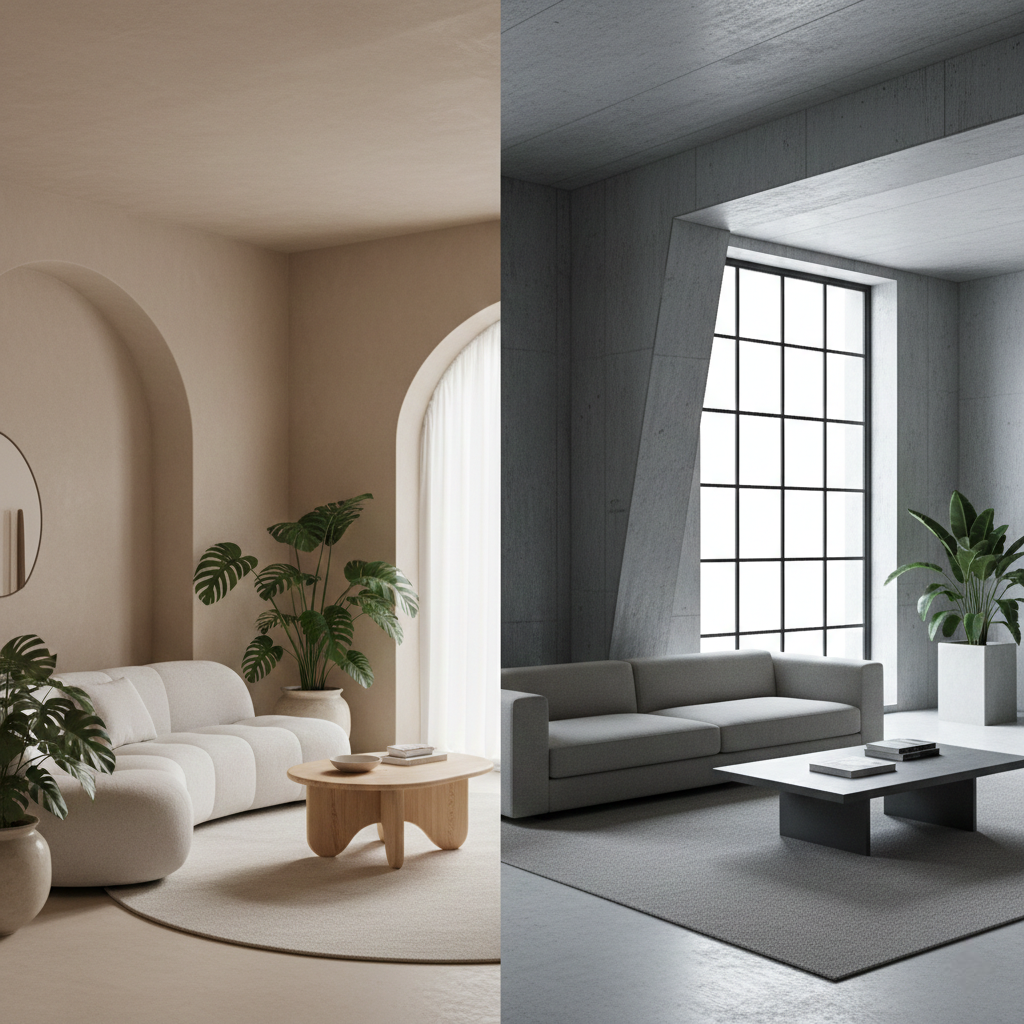
Sharp Corners and the Defense Response Research from Harvard Medical School shows that sharp, angular forms activate the amygdala—the brain’s fear center. Much like thorns in nature or the teeth of predators, sharp architectural lines subconsciously trigger a low-level state of alertness.
The Calming Power of Curves Soft, curved forms, on the other hand, stimulate the brain’s reward system (the anterior cingulate cortex). Our eye muscles expend less effort following curves, sending a subtle message to the brain: this space is fluid, safe, and welcoming.
Architect’s Note: Incorporating curved furniture or softened corner details helps relax the user’s defensive instincts and encourages a sense of ease within the space.
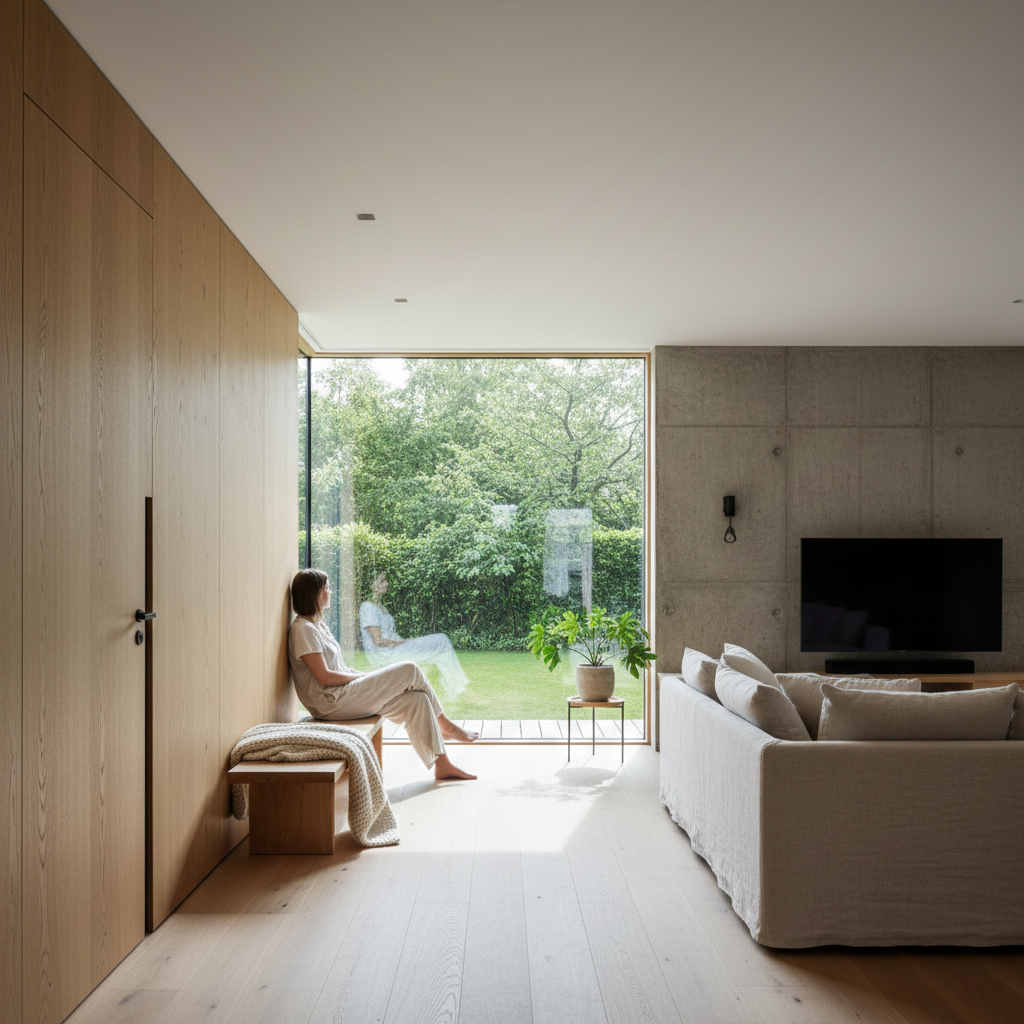
Why do the tables against the wall fill up first in restaurants? The answer lies in evolutionary psychology’s Prospect–Refuge Theory.
Refuge: Sitting with our backs against a solid surface satisfies our instinct to protect ourselves from unseen threats.
Prospect: Having a wide, open view in front of us fulfills our need to observe and control our surroundings.
When these two conditions are balanced—such as a chair backed by a wall with a clear view ahead—the brain reaches its highest level of comfort. In contrast, seating placed directly in front of doorways or circulation paths creates a persistent feeling of unease.
Ceiling Height and the “Cathedral Effect”
Ceiling height is not just a volumetric choice—it’s a cognitive directive.
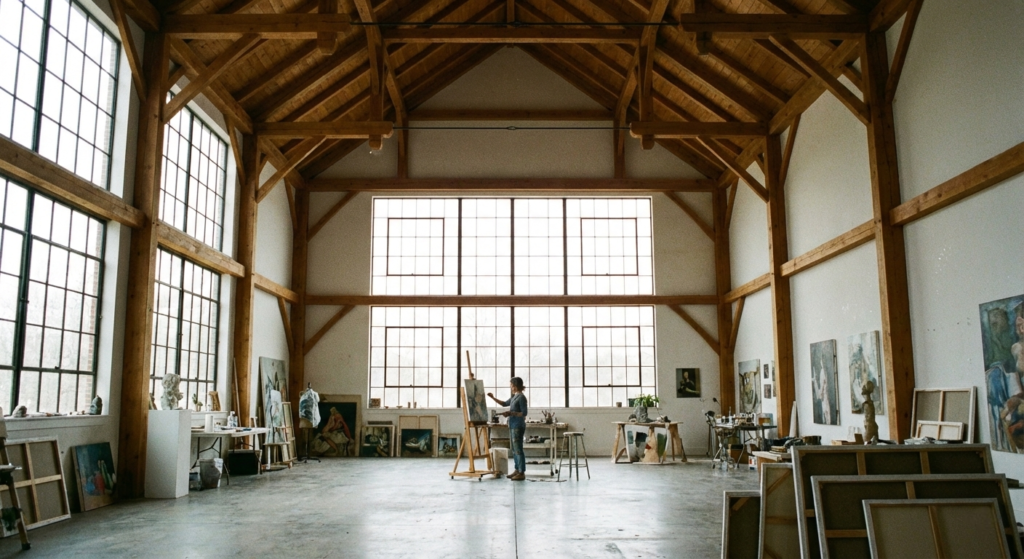
High Ceilings encourage abstract thinking, creativity, and a sense of freedom. They are ideal for studios and creative workspaces.
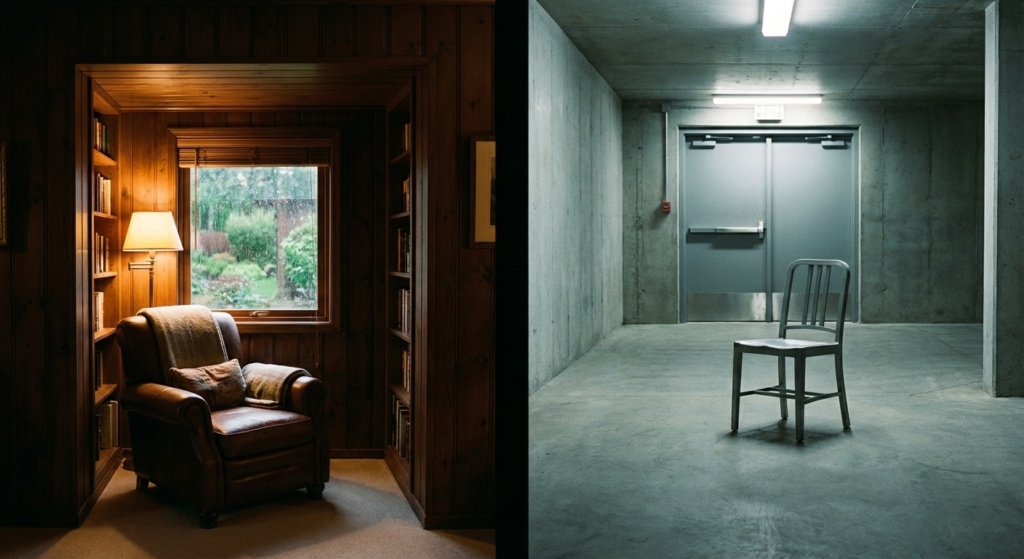
Low Ceilings enhance focus, analytical thinking, and feelings of containment—perfect for study rooms or reading niches.
Narrow Corridors and the Violation of Personal Space
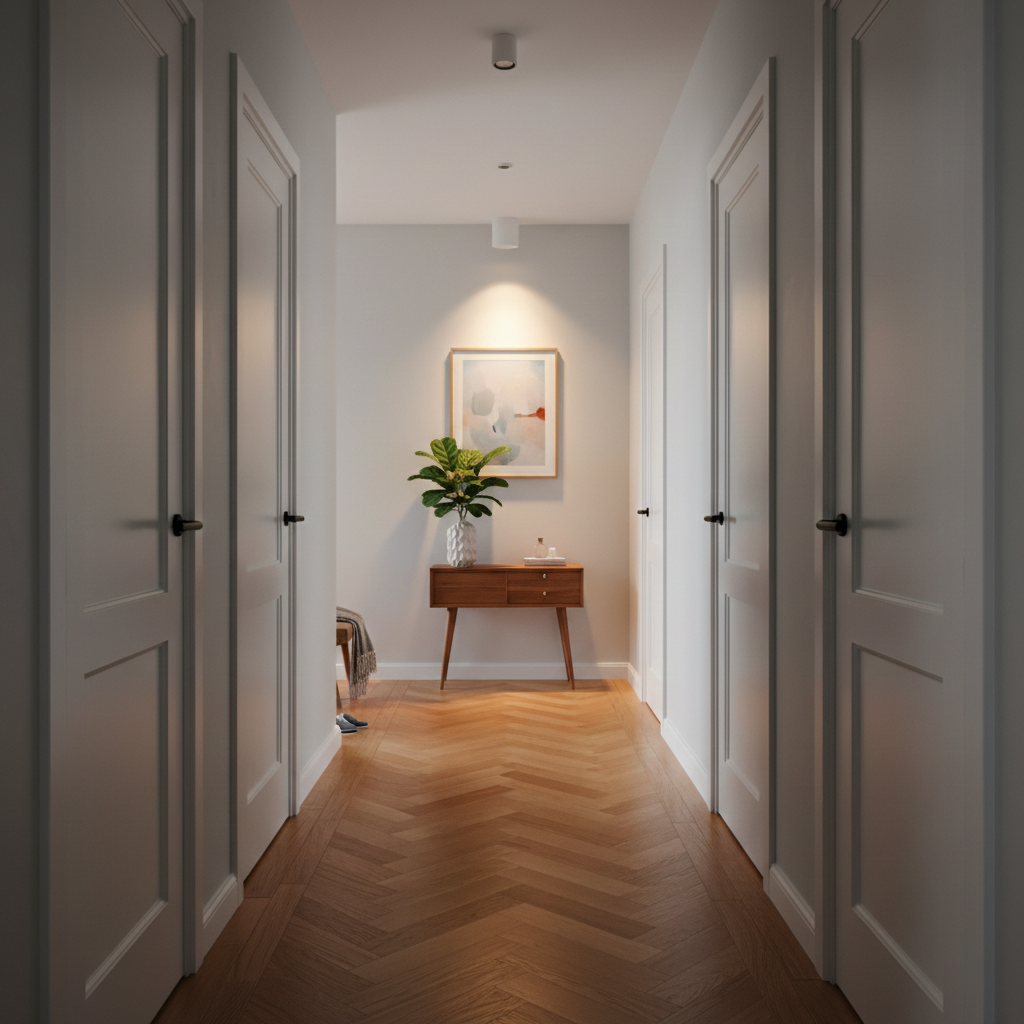
The brain imagines an invisible safety bubble around the body, known as peripersonal space. Narrow, low corridors may not physically touch this bubble, but the brain still perceives them as a threat or “violation.”
Design Solution: By placing an artwork, a light source, or a window at the end of long corridors, you give the brain a visual target. This sense of direction helps prevent the rise of stress hormones like cortisol and reduces feelings of confinement.
Neuroarchitecture Strategies at Home Scale
Designing with the brain in mind doesn’t require radical interventions—small adjustments can make a significant difference:
Sociopetal Layouts: Arranging seating to face one another encourages social interaction and stimulates oxytocin, the bonding hormone.
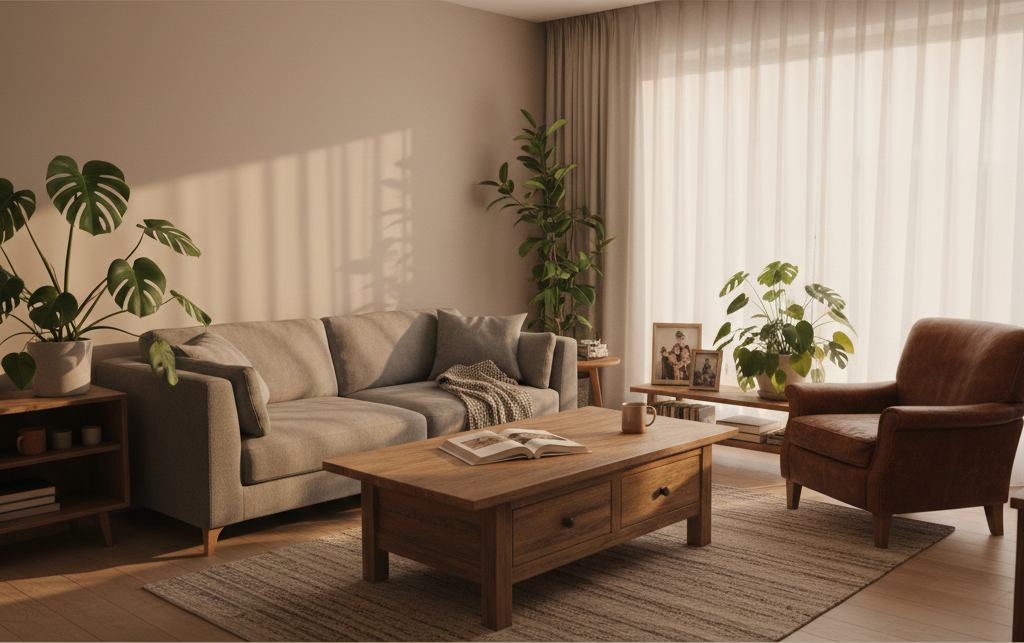
Circadian Lighting: Shifting from blue light to warm, amber tones in the evening supports melatonin production and prepares the brain for rest.
Biophilic Textures: Natural materials like wood and stone, along with plants and fractal patterns, reduce cognitive load and lower stress levels.
In Conclusion
Architecture is not merely the artful arrangement of concrete and steel—it is the art of shaping human biology. Every wall we design becomes an instrument that influences mood, creativity, and well-being.
When we design spaces not only for the eye but for the brain, our buildings evolve beyond shelters. They become true sanctuaries for healing, focus, and life itself.